The Black Stone of the Kaaba: its story and how to greet it
What pilgrims kiss today is eight small pieces in a silver frame, the largest the size of a date. The Black Stone's story, and how to greet it in tawaf.
6 min read
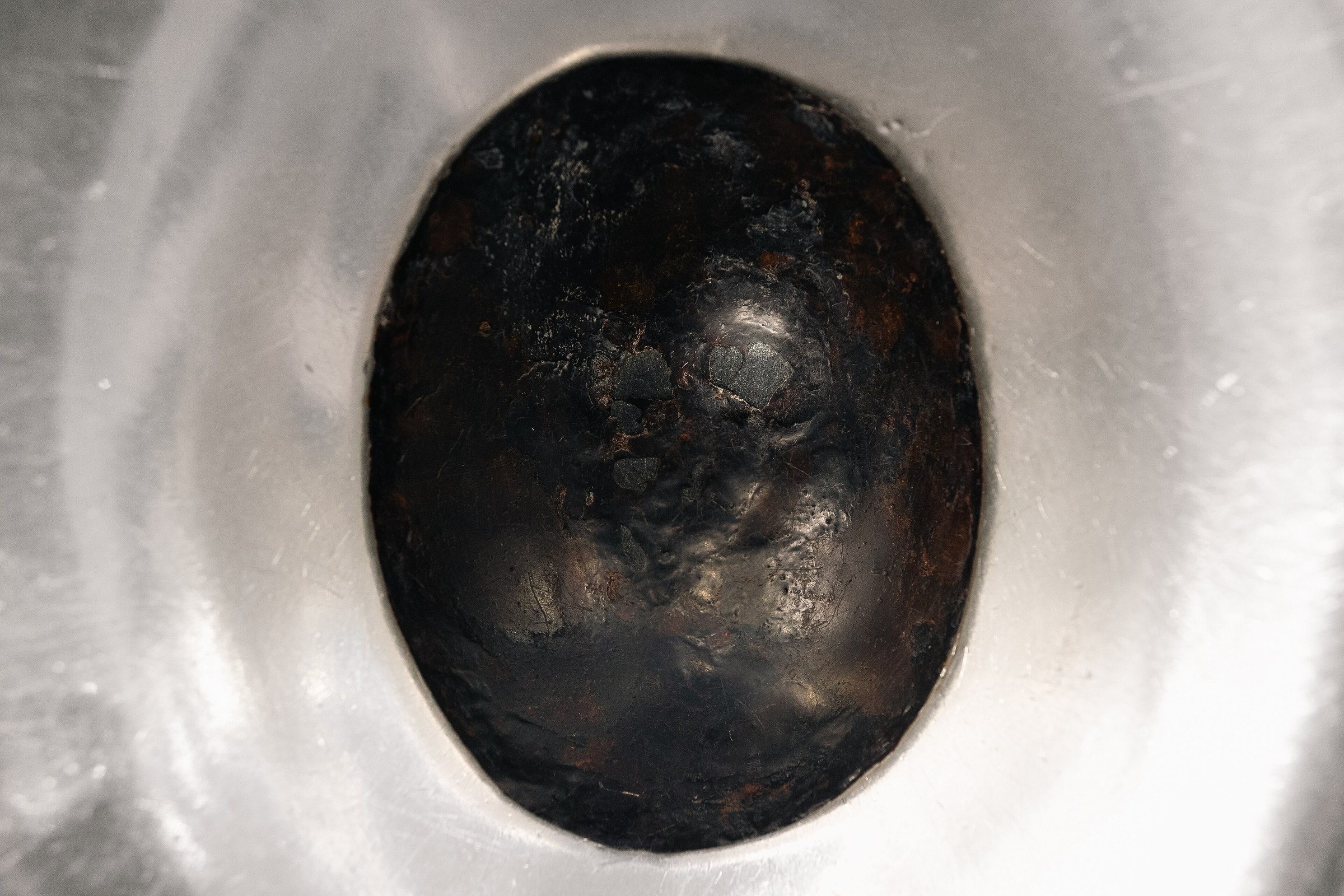
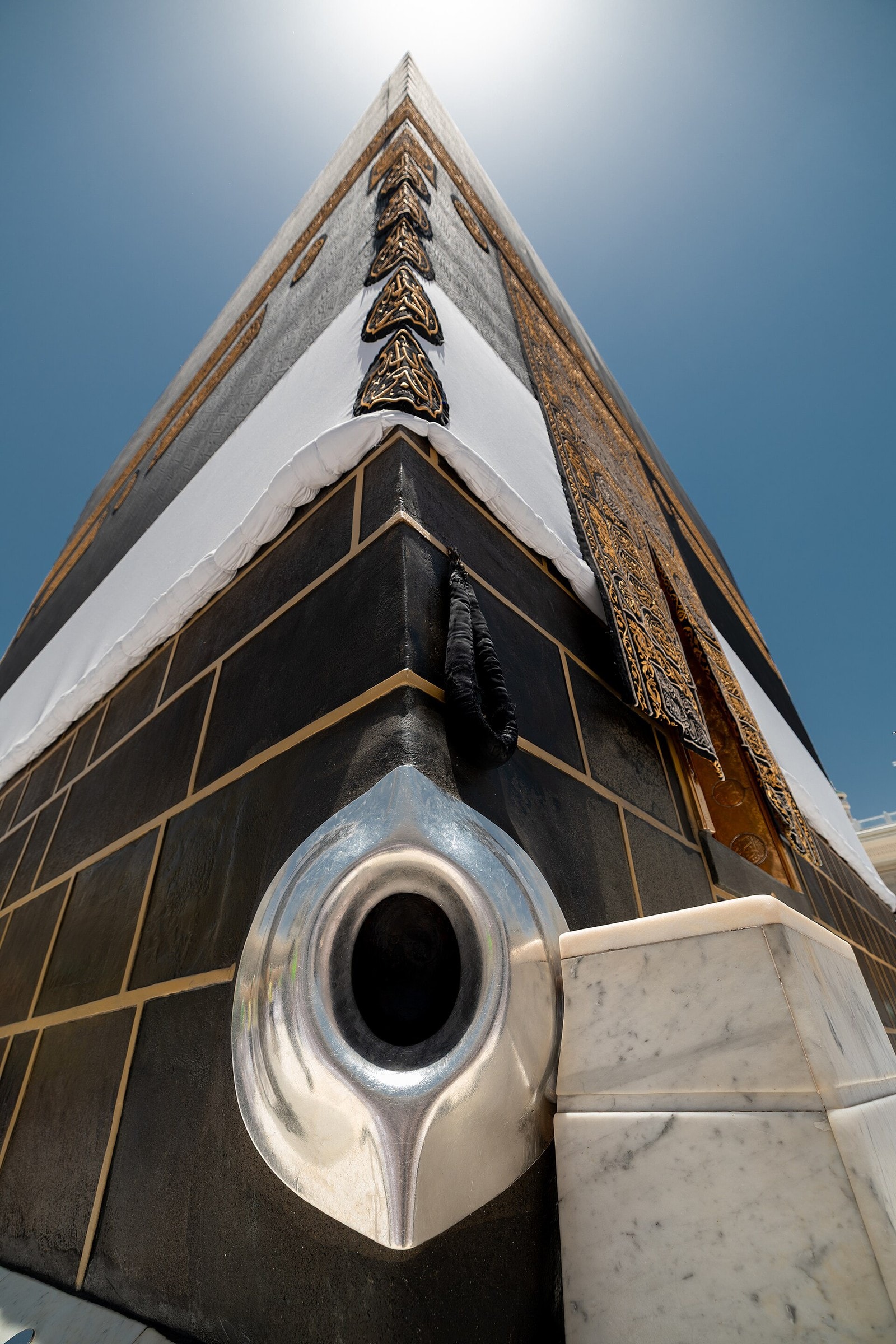
What pilgrims kiss at the corner of the Kaaba today is eight small pieces of stone of different sizes, the largest about the size of a date. Together they form an oval about 30 cm across, held in a frame of pure silver. Saudipedia, the official Saudi encyclopedia, says the Black Stone is reported to have fifteen pieces. The other seven lie under the brown paste of wax, musk and ambergris that everyone who touches it sees.
Our guides to how to perform Umrah and tawaf and sa'i mention it as the point where each round begins and ends. This one is about the Stone itself: its story, and how to reach it or greet it from a distance without hurting anyone, yourself included.
Where it is
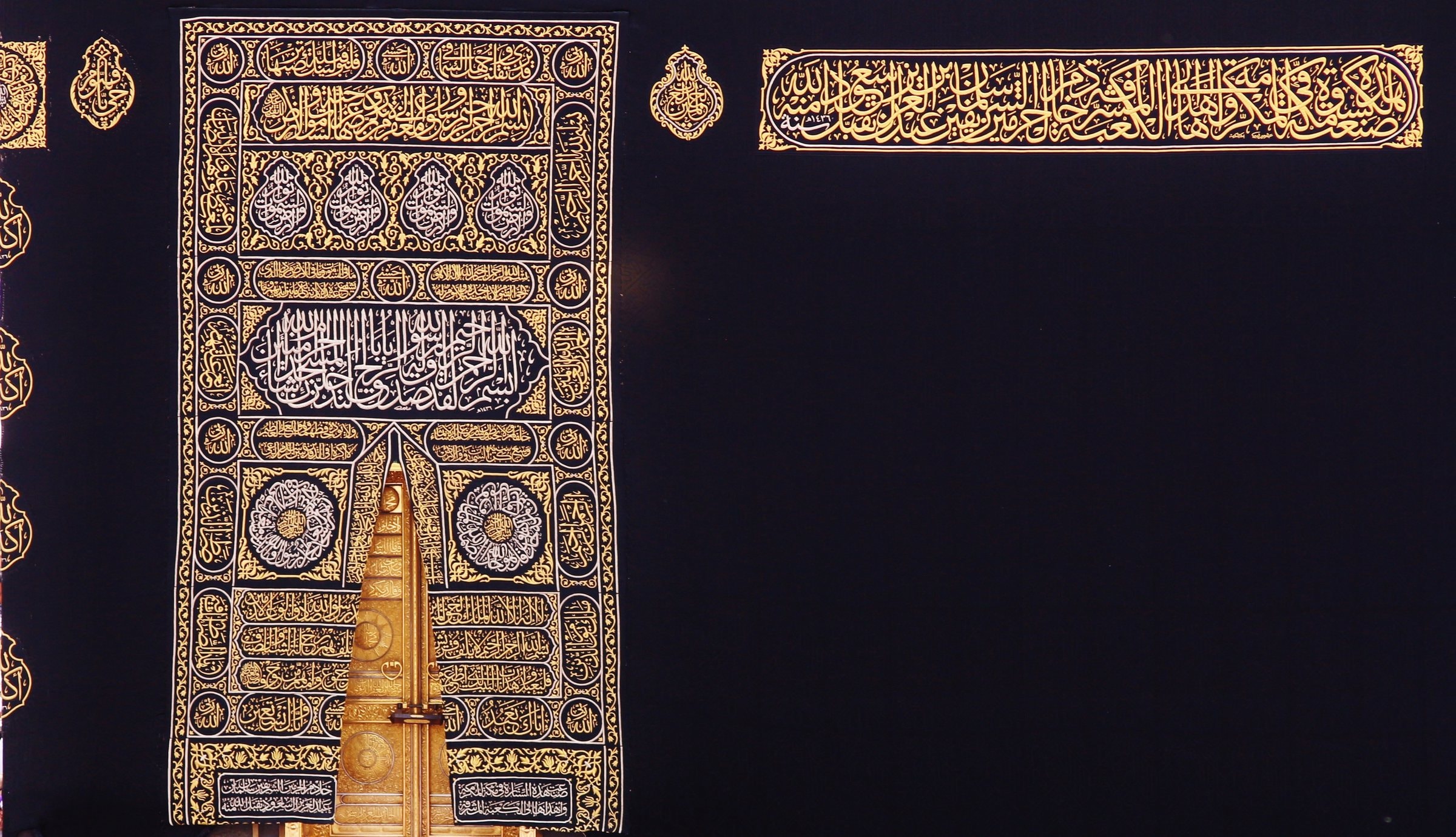
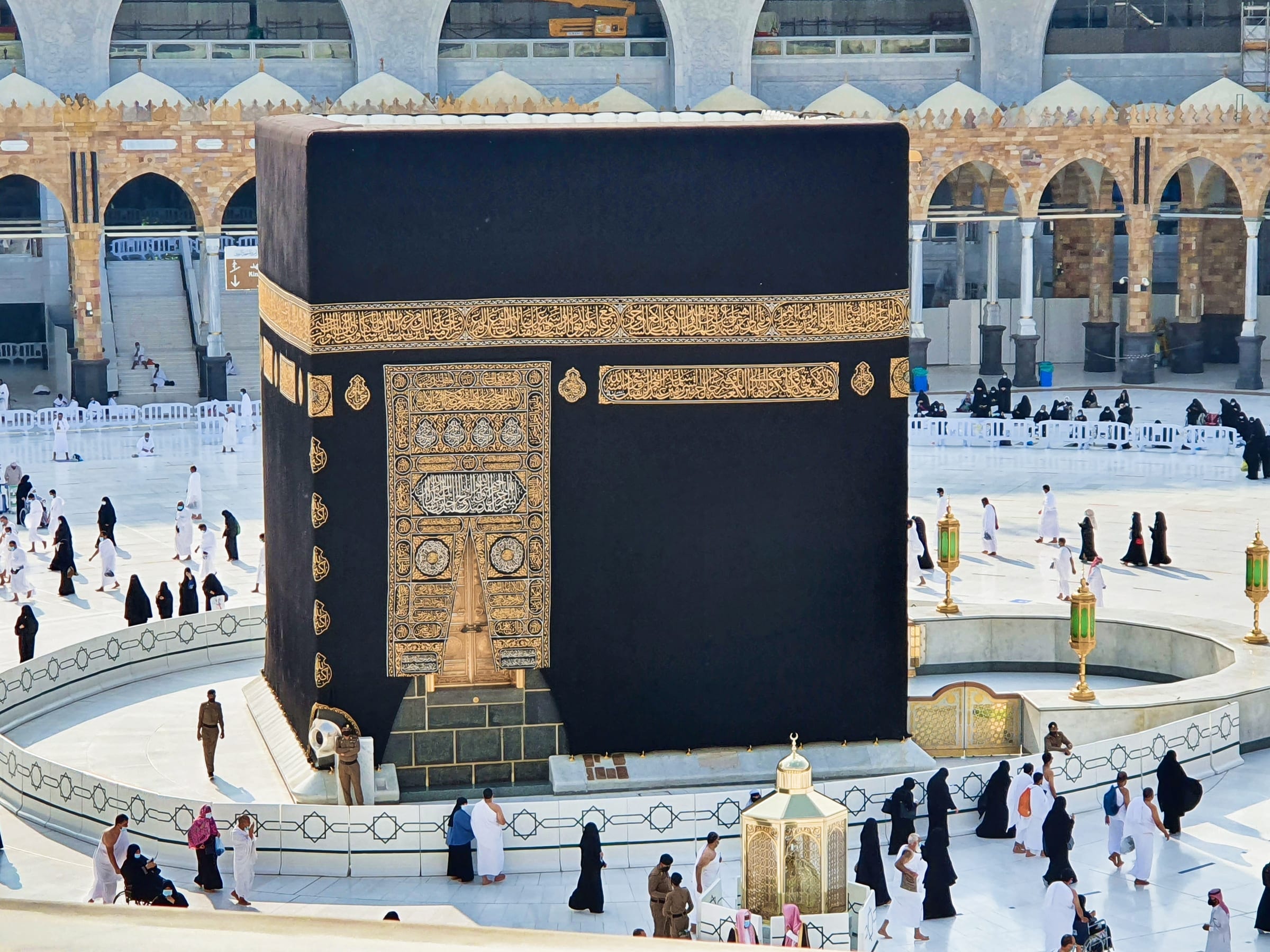
The Black Stone is set in the south-east corner of the Kaaba, to the left of the door as you face it, about 1.5 m above the floor of the mataf. The stretch of wall between the Stone and the door is the Multazam, the Ministry of Hajj and Umrah explains. On the upper floors of Masjid al-Haram, a green light marks its line.
"Whiter than milk"
Ibn Abbas reported that the Messenger of Allah ﷺ said:
"The Black Stone descended from the Paradise, and it was more white than milk, then it was blackened by the sins of the children of Adam." (al-Tirmidhi 877, graded hasan sahih by al-Tirmidhi and sahih by al-Albani)
The Prophet ﷺ also said about the Stone: "By Allah! Allah will raise it on the Day of Resurrection with two eyes by which it sees and a tongue that it speaks with, testifying to whoever touched it in truth." (al-Tirmidhi 961, graded hasan by al-Tirmidhi and sahih by al-Albani)
"I know that you are a stone"
Umar ibn al-Khattab came near the Black Stone, kissed it and said: "No doubt, I know that you are a stone and can neither benefit anyone nor harm anyone. Had I not seen Messenger of Allah ﷺ kissing you I would not have kissed you." (al-Bukhari 1597, Muslim 1270)
The day the Prophet ﷺ set it in place
Before the revelation began, Quraysh rebuilt the Kaaba after rains had brought part of it down, the Ministry of Hajj and Umrah recounts. When it came to putting the Stone back, the clans quarrelled over who would do it. They agreed that the first man to come in through the gate of Banu Shaybah would place it, and the first to come in was the Prophet ﷺ. He asked for a cloth, laid the Stone in the middle of it, and had a man from each clan hold an edge so they could lift it together. Then he took it and set it in place with his own hand. Imam Ahmad narrates this from Ali, and Shu'ayb al-Arna'ut graded it hasan.
What the Stone has been through
- In the time of Abdullah ibn al-Zubayr, a fire at the Kaaba cracked the corner, and Ibn al-Zubayr bound it with silver.
- In 189 AH (805 CE) that silver had worn thin, and the caliph Harun al-Rashid had the Stone drilled with diamond and silver poured into the holes.
- In 317 AH (930 CE) the Qarmatians attacked Makkah, prised out the Stone and carried it off to their land, Hajar. It stayed there 22 years and came back to the Kaaba on the Day of Sacrifice in 339 AH (951 CE).
- In Muharram 1351 AH (May 1932) a man prised a piece out of the Stone. The guards of Masjid al-Haram caught him, and King Abdulaziz had the piece put back on 28 Rabi' al-Akhir 1351 (30 August 1932).
- The silver frame has been replaced twice: in 1399 AH (1979) under King Khalid, and in 1422 AH (2001) under King Fahd.
- In May 2021 the General Presidency for the Affairs of the Two Holy Mosques released the first photos of the Stone made by focus stacking: 1,050 shots over seven hours, at 49,000 megapixels.
How to greet it without hurting anyone
The Ministry of Hajj and Umrah puts it like this. The tawaf begins at the corner of the Black Stone, and at the start of each round you point to it with your hand and say "Allāhu akbar". You don't have to be at the exact spot, since it is approximate: once you find yourself level with the Stone, say the takbir. If you can kiss it, you have followed the Sunnah, and if the crowds of the season make that impossible, nothing is due on you.
Pointing is what the Prophet ﷺ himself did. Ibn Abbas narrated: "The Prophet ﷺ performed Tawaf of the Ka'ba riding a camel, and every time he came in front of the Corner (having the Black Stone), he pointed towards it with something he had with him and said Takbir." (al-Bukhari 1613)
Sheikh Ibn Baz was asked about a pilgrim who nearly suffocated at the Stone, squeezed by people stronger than him. Nothing is due on him, Ibn Baz answered, and he shouldn't push: when he comes level with the Stone, he says the takbir from a distance. The strong, he added, hurt and harm the weak when they push. As he described the Sunnah, whoever can reach the Stone easily kisses it, touches it and says "Bismillāh, wallāhu akbar", and whoever could only reach it by pushing points to it from a distance while walking and says the takbir on coming level with it.
Ibn Baz also said a woman may kiss the Stone if she can do it at a quiet time, without crowding among men; otherwise she does her tawaf behind the people, at the edge of the mataf. There's more in Umrah for women.
The quieter hours
In August 2026 the General Authority for the Care of the Two Holy Mosques said the crowd in Masjid al-Haram is usually light from 10 pm to 4 am and from 9 am to 4 pm, and heaviest from 5 pm to 9 pm. Its website shows the crowd in the mataf live. A guard stands beside the Stone holding a strong rope, to organise the people coming to kiss it and show them how, so go where he directs you. More tips are in first Umrah tips.
The perfume, and ihram
The Authority perfumes the Black Stone and the Multazam with oud oil five times a day, and uses 20 tolas of perfume a day (a tola is 12 g) on the Stone, the Multazam and the Yemeni corner, according to Saudipedia. So the Stone is often wet with scent, and perfume is one of the things ihram rules out (ihram and the miqat).
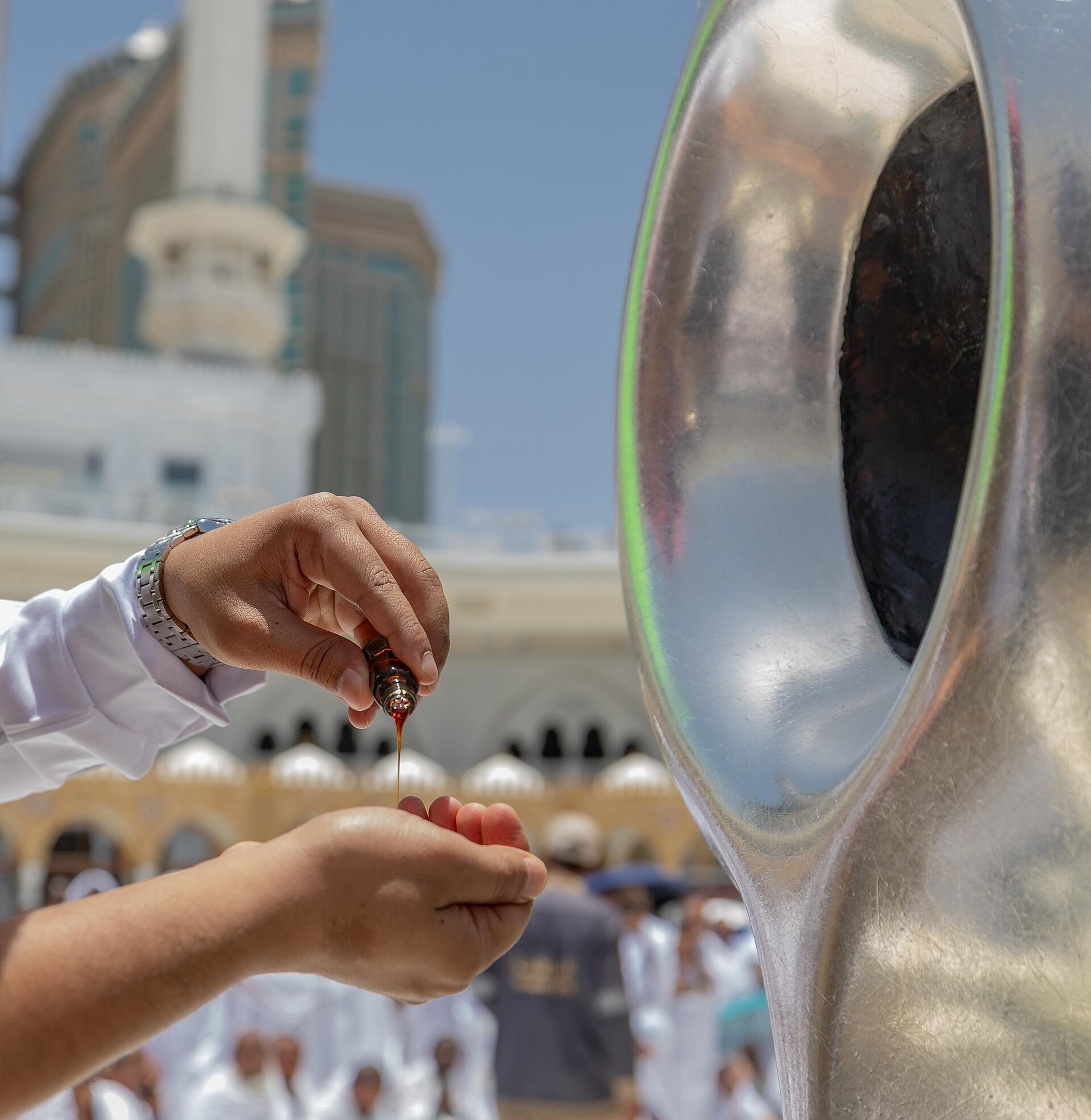
- Sheikh Ibn Baz was asked whether the heavy perfume on the Black Stone and the Yemeni corner affects ihram. It doesn't, he said: if it is wet, don't touch it, and if you touched it without knowing, it does you no harm; the matter is broad.
- Egypt's Dar al-Ifta (12 August 2014) sets out the Shafi'i view: whoever touches it not expecting perfume, or thinking it dry, owes nothing but washes it off, while doing it on purpose calls for a fidya. If washing is hard in the crowd, it allows the Maliki view that washing isn't needed unless there is a lot of it.
At the Black Stone, kiss it if you can without pushing anyone. If not, point with your hand, say "Allāhu akbar" and keep walking. In ihram, while the perfume is wet, pointing is enough.
Hotels near Masjid al-Haram
Compare the walk, the view and the price, then book in minutes.
See the hotelsSources
- Ministry of Hajj and Umrah: tawaf (Arabic page, last updated 15 November 2026) · Checked 19 Nov 2026
- Ministry of Hajj and Umrah: tawaf (English page) · Checked 19 Nov 2026
- Saudipedia, the official Saudi encyclopedia: the Black Stone · Checked 19 Nov 2026
- Saudipedia: perfuming and censing Masjid al-Haram · Checked 19 Nov 2026
- Al-Madina: the General Presidency for the Affairs of the Two Holy Mosques photographs the Black Stone by focus stacking, 3 May 2021 · Checked 19 Nov 2026
- Al-Madina: the General Authority for the Care of the Two Holy Mosques on the least crowded hours, 13 August 2026 · Checked 19 Nov 2026
- Dorar: al-Tirmidhi 877, the Black Stone came down from Paradise (al-Tirmidhi: hasan sahih; al-Albani, Sahih al-Tirmidhi 877: sahih) · Checked 19 Nov 2026
- Sunnah.com: Jami' at-Tirmidhi 877 · Checked 19 Nov 2026
- Dorar: al-Tirmidhi 961, the Stone will bear witness (al-Tirmidhi: hasan; al-Albani, Sahih al-Tirmidhi 961: sahih) · Checked 19 Nov 2026
- Sunnah.com: Jami' at-Tirmidhi 961 · Checked 19 Nov 2026
- Dorar: Sahih al-Bukhari 1597, Umar kissing the Black Stone · Checked 19 Nov 2026
- Sunnah.com: Sahih al-Bukhari 1597 · Checked 19 Nov 2026
- Sunnah.com: Sahih Muslim 1270a · Checked 19 Nov 2026
- Dorar and Sunnah.com: Sahih al-Bukhari 1613, pointing to the Black Stone · Checked 19 Nov 2026
- Dorar: Musnad Ahmad, from Ali, the Stone lifted in a cloth (Shu'ayb al-Arna'ut, Takhrij al-Musnad: hasan) · Checked 19 Nov 2026
- Ibn Baz, fatwa 7270: pushing to kiss the Black Stone · Checked 19 Nov 2026
- Ibn Baz, fatwa 9497: a woman kissing the Black Stone · Checked 19 Nov 2026
- Ibn Baz, fatwa 24989: does the Kaaba's perfume affect ihram? · Checked 19 Nov 2026
- Dar al-Ifta al-Misriyyah, research fatwa 181: touching the Kaaba and the Black Stone in ihram when they are perfumed, 12 August 2014 · Checked 19 Nov 2026