Ihram and the miqat: what to wear and what to avoid
The five miqats, ihram on a plane, what men and women wear, what ihram forbids and allows, and what to do if you make a mistake.
The Jiwar team5 min read
Ihram is the intention to enter the rites, and it is where Umrah begins: you make the intention and say the talbiyah, and from that moment until you cut your hair, some everyday things are off limits. You enter it at the miqat, a boundary on the road to Makkah that no one heading for Umrah may cross without ihram. The whole Umrah, step by step, is in how to perform Umrah.
The five miqats
The Prophet ﷺ set four of them and Umar ibn al-Khattab the fifth (al-Bukhari 1524 and 1531). Each one serves the people of its region and anyone else who passes it. Distances are to Makkah, as the Ministry of Hajj and Umrah gives them:
- Dhul Hulayfah (Abyar Ali), 420 km: for Madinah and everyone travelling from it.
- Al-Juhfah, 187 km: for the Levant. Pilgrims today enter ihram at Rabigh, 204 km away.
- Qarn al-Manazil (al-Sayl al-Kabir), 94 km: for Najd, Riyadh included, and the road from Taif.
- Yalamlam (al-Sa'diyah), 115 km: for Yemen.
- Dhat Irq, 92 km: for Iraq.
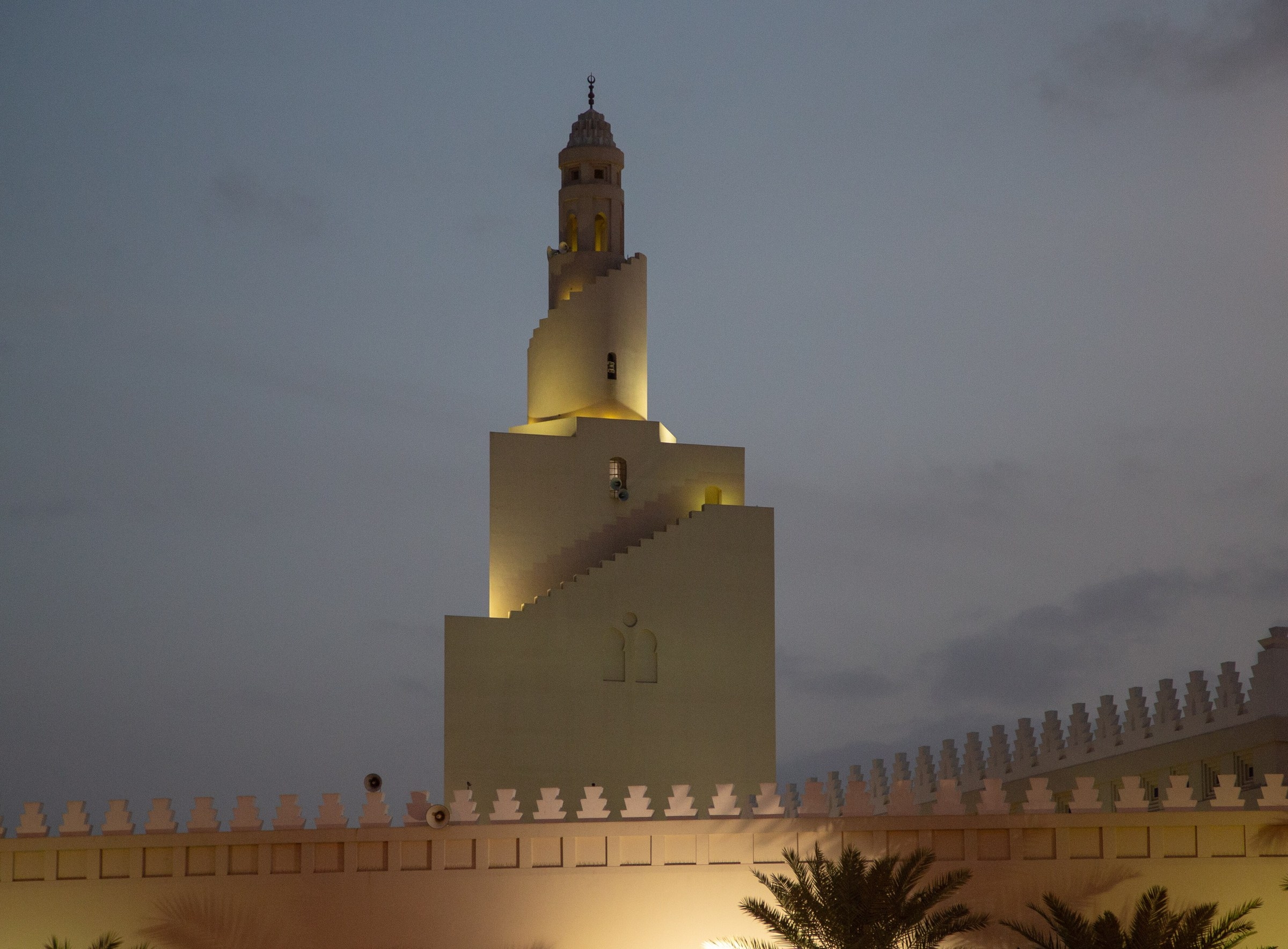
If you live between the miqats and Makkah, in Jeddah for example, you enter ihram where you are. Anyone in Makkah, resident or visitor, who wants to make Umrah goes out of the Haram boundary first, usually to Masjid Aisha at al-Tan'im (al-Bukhari 1784).
Ihram on a plane
Most pilgrims from abroad pass their miqat in the air before landing in Jeddah. The Ministry is clear that King Abdulaziz airport in Jeddah is not a miqat, nor a place to enter ihram. So:
- Bathe at home and put on your ihram clothes before you fly, or in good time on the plane. The toilets queue up as the miqat gets close.
- Saudia announces the miqat in advance and again when the plane reaches it. Not every airline does.
- Make your intention at the announcement. The Ministry suggests doing it about half an hour early, to be safe.
- If you are flying to Madinah first, don't enter ihram on the plane. You enter it at Dhul Hulayfah when you leave Madinah for Makkah.
Before you enter ihram
None of these is required; the Ministry lists them as Sunnah:
- Trim your nails and remove underarm hair, because you can't once you are in ihram.
- Bathe, men and women alike, even during a period. If you can't, make wudu. If you are flying, you can bathe at home before leaving for the airport.
- Men may put perfume on the body, but not on the ihram clothes.
- Enter ihram after a prayer: the obligatory prayer if its time has come, otherwise two rak'ahs.
What men wear
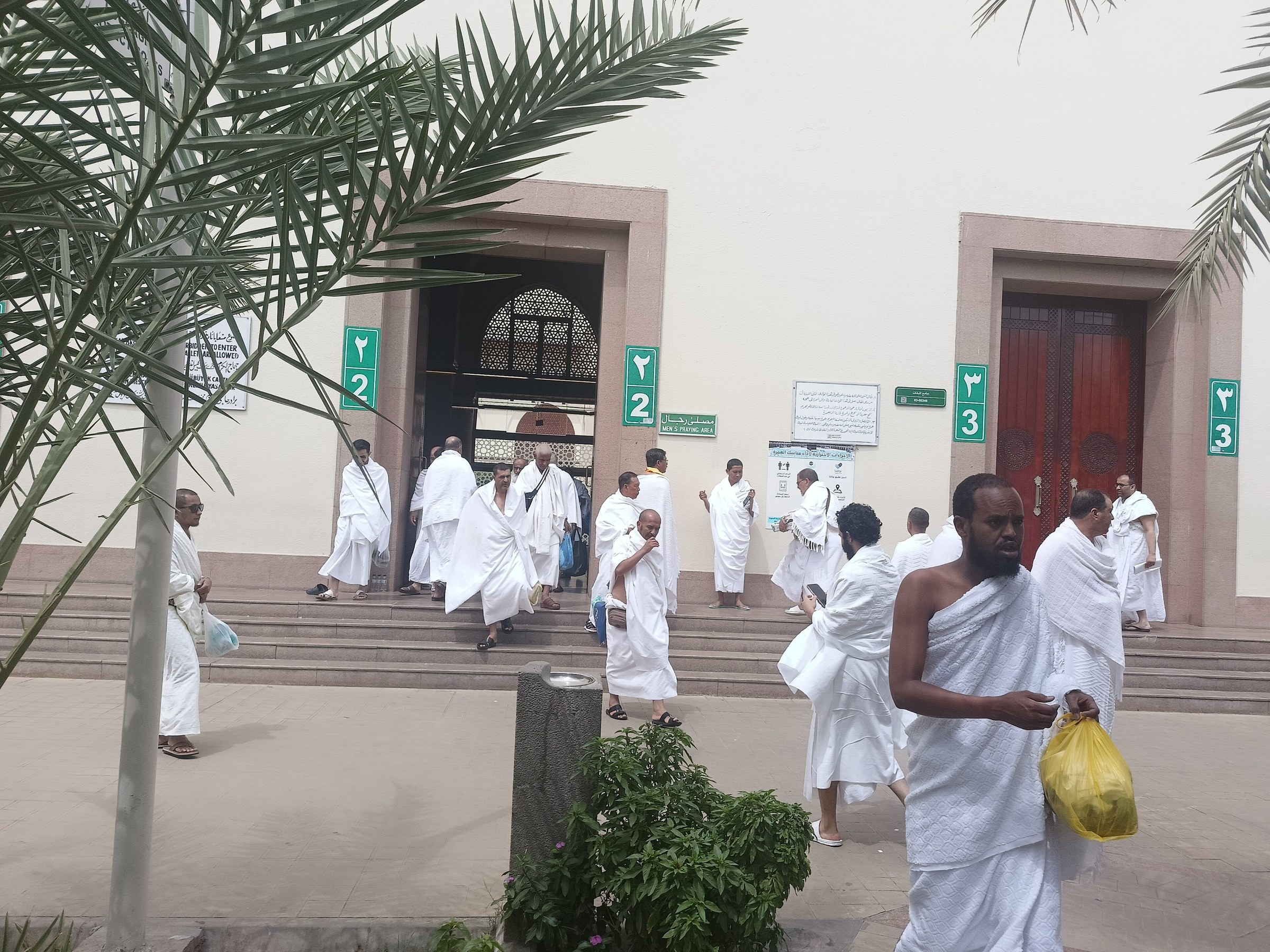
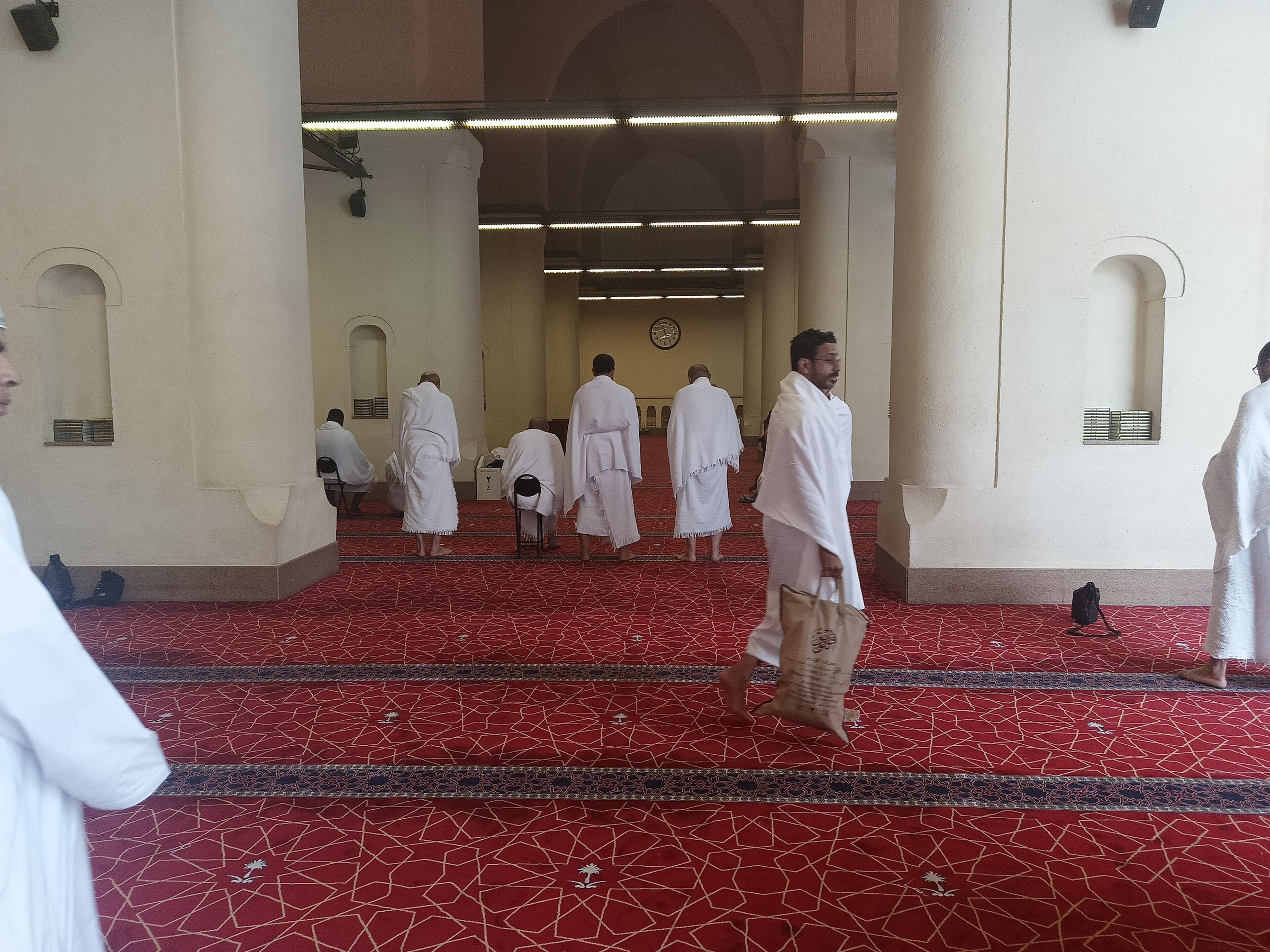
Two sheets: the izar wrapped round the waist and the rida over the shoulders, preferably white and clean, with the head left bare. No shirt, trousers, turban, socks or gloves, and no shoes that cover the whole foot and heel; sandals are fine (al-Bukhari 1542). The rida covers both shoulders, and the right one is bared only during tawaf.
Men may wear a belt to hold the izar, with a pouch for a phone and money, and a watch, a ring, glasses and bandages. An umbrella, or any shade, is fine as long as it doesn't touch the head.
What women wear
Women enter ihram in their ordinary clothes, in any colour, as long as they are loose, covering and plain. No niqab and no gloves (al-Bukhari 1838), though a woman may cover her face when men outside her family are around. Socks, shoes, glasses, rings, a watch and bandages are all fine.
The intention and the talbiyah
Make the intention in your heart and say "Labbayka 'umrah", add a condition if you fear something may stop you, then say the talbiyah until you reach the Kaaba. The exact words and their meaning are in the duas of Umrah.
What ihram forbids
For men and women:
- removing any hair, by shaving, cutting or plucking;
- cutting nails;
- perfume, on the body or on clothes;
- a marriage contract: in ihram you may not marry, marry anyone off or propose (Muslim 1409);
- marital relations and anything leading to them (al-Baqarah 197);
- hunting land animals (al-Ma'idah 95).
For men only: fitted clothes such as shirts, trousers and socks, and anything on the head that touches it, such as a cap or a turban (al-Bukhari 1542). For women only: the niqab and gloves (al-Bukhari 1838).
Avoid quarrels, arguments and raised voices too. They aren't on the list, but they spoil the ihram all the same.
What ihram allows
- Bathing and washing your head. The Prophet ﷺ washed his head in ihram (al-Bukhari 1840).
- A belt, a watch, a ring, glasses and bandages.
- Shade from an umbrella, a car roof or a tent, as long as nothing touches your head.
If you make a mistake
If you pass the miqat without ihram, the Ministry says to go back and enter ihram there. If you enter ihram after passing it, you owe an expiation (fidyah).
If illness or pain means you have to shave, you may, and you then choose one of three: fast three days, feed six poor people, or sacrifice a sheep (al-Baqarah 196, al-Bukhari 1814).
If you wear something fitted or put on perfume by mistake or without knowing, take it off or wash it off as soon as you realise. Scholars differ on what is owed after that, so ask a scholar you trust or your group's guide.
Where the schools differ
- Most scholars recommend two rak'ahs for ihram. Others hold that no prayer belongs to ihram as such, and that you enter it after an obligatory prayer or the prayer after wudu.
- For something done by mistake or without knowing, some scholars excuse perfume, clothing and covering the head, while most still require the expiation for removing hair or nails.
Putting on the ihram clothes doesn't put you in ihram; the intention at the miqat does. So dress at home or at the hotel whenever suits you: the rules start only when you say "Labbayka 'umrah". If you will be walking a lot, an unscented cream between the thighs stops the sheets from chafing.
Hotels near Masjid al-Haram
Compare the walk, the view and the price, then book in minutes.
See the hotelsSources
- Ministry of Hajj and Umrah: Ihram · Checked 27 Oct 2026
- Ministry of Hajj and Umrah: the miqats · Checked 27 Oct 2026
- Presidency for the Religious Affairs of the Two Holy Mosques: The Manner of Performing Umrah (Ibn Baz, 2025 edition) · Checked 27 Oct 2026
- Sahih al-Bukhari 1524 · Checked 27 Oct 2026
- Sahih al-Bukhari 1531 · Checked 27 Oct 2026
- Sahih al-Bukhari 1784 · Checked 27 Oct 2026
- Sahih al-Bukhari 1542 · Checked 27 Oct 2026
- Sahih al-Bukhari 1838 · Checked 27 Oct 2026
- Sahih al-Bukhari 1840 · Checked 27 Oct 2026
- Sahih al-Bukhari 1814 · Checked 27 Oct 2026
- Sahih Muslim 1409 · Checked 27 Oct 2026
- Majelis Ulama Indonesia: Miqat Haji dan Umroh II (1981) · Checked 27 Oct 2026