Umrah for women: ihram, periods and what's different
What women need to know for Umrah: travelling without a mahram, ihram clothes and rules, what differs in the rites, periods during Umrah, and Madinah.
The Jiwar team3 min read
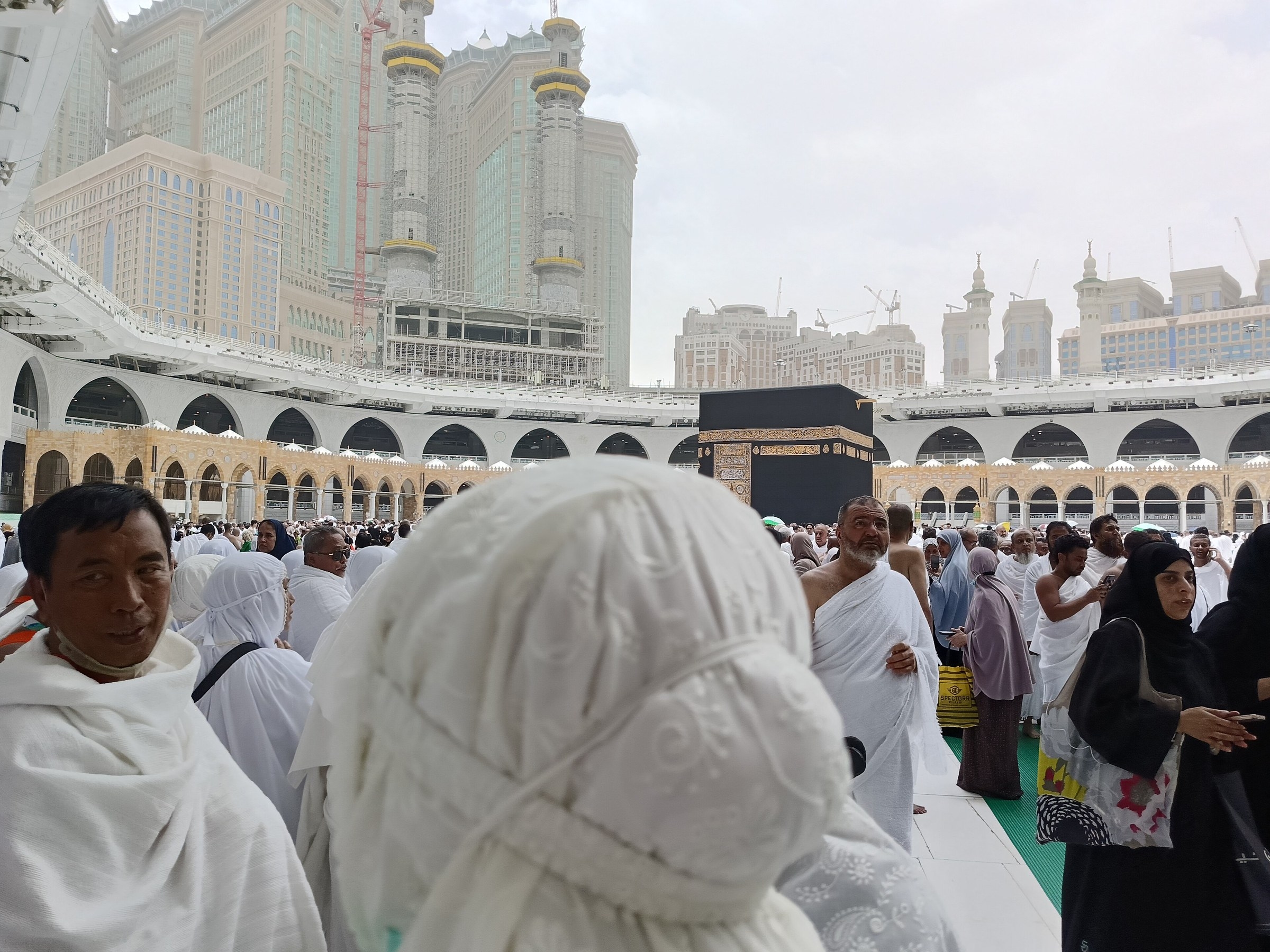
A woman's Umrah has the same rites and the same steps as a man's. The differences are few: clothing, a handful of details in tawaf, sa'i and the haircut, and periods. They are gathered here, following Ibn Baz's guide to Umrah published by the Presidency for the Religious Affairs of the Two Holy Mosques. The full steps are in how to perform Umrah.
Travelling without a mahram
The Ministry of Hajj and Umrah allows a woman to come for Umrah without a mahram. Whether she should travel without one is a question scholars answer differently, so ask a scholar you trust. The visa rules are in the Umrah visa and the Nusuk app.
What to wear in ihram
A woman enters ihram in her ordinary clothes, in any colour, as long as they are loose, covering and plain. She doesn't wear the niqab, the burqu' or gloves. The Prophet ﷺ said: "A woman in ihram should not cover her face with a niqab or wear gloves" (al-Bukhari 1838). In front of men outside her family she covers her face and hands with something else, such as the edge of her scarf drawn down.
Socks, shoes, glasses, rings and a watch are all fine. Choose a headscarf that stays in place while you walk and make wudu, and comfortable shoes: the sa'i alone is close to three kilometres. Our article on ihram and the miqat has the clothing in detail.
What ihram forbids a woman
The same as a man: removing hair, cutting nails, perfume on the body or clothes, a marriage contract, marital relations and anything leading to them, and hunting. Only the clothing differs: she wears stitched clothes and covers her head, and the niqab and gloves are the only things she gives up.
What's different in the rites
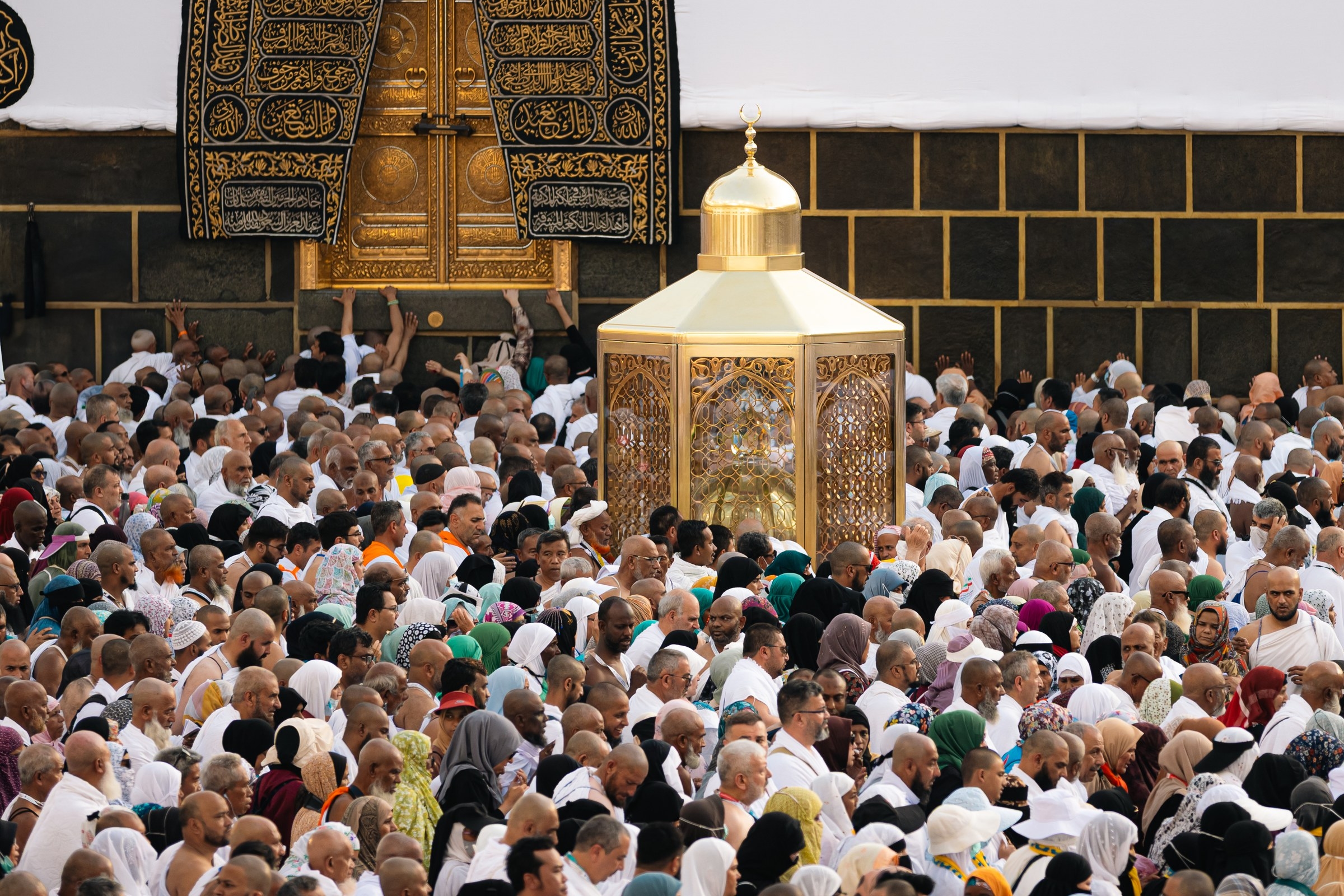
- She says the talbiyah quietly, so only those beside her hear it.
- She doesn't bare her right shoulder or hurry in the first rounds of tawaf; those are for men. She walks at her normal pace.
- She doesn't push in among men at the Black Stone. Pointing to it and saying "Allāhu akbar" is enough.
- She doesn't jog between the green lights in the sa'i, but walks the whole way.
- She gathers her hair and cuts a fingertip's length or less from the ends. Women don't shave.
Periods and Umrah
If your period starts before the miqat, enter ihram like everyone else: bathe, make the intention and say the talbiyah. Then don't do tawaf until it ends and you have bathed. When Aisha's period came, the Prophet ﷺ told her: "Do everything the pilgrims do, except tawaf of the House, until you are pure" (al-Bukhari 1650). You stay in ihram until then. Bleeding after childbirth is treated the same way.
If your period starts after tawaf, carry on with the sa'i: it is valid without purity, Ibn Baz says.
Asked about pills that delay a period during Hajj and Ramadan, Ibn Baz said there is no harm in them. If you want to use them, talk to your doctor well before you travel. If your return date might come before you are pure, ask a scholar you trust before you set off.
In Madinah
The greeting at the Prophet's ﷺ grave, through the Salam passage, is for men. A woman sends her greeting and blessings from where she prays in the mosque, as our guide to visiting the Prophet's Mosque explains. The Rawdah has hours for women, with a permit from Nusuk: see the Rawdah permit.
If your period is due during the trip, build in a few spare days in Makkah, or start in Madinah so you reach the Haram once you're pure. Makkah or Madinah first? helps you choose.
Find your hotel by the Haram
Compare the walk, the view and the price, then book in minutes.
See the hotelsSources
- Presidency for the Religious Affairs of the Two Holy Mosques: The Manner of Performing Umrah (Ibn Baz, 2025 edition) · Checked 28 Oct 2026
- Sahih al-Bukhari 1650 · Checked 28 Oct 2026
- Sahih al-Bukhari 1838 · Checked 28 Oct 2026
- Ibn Baz: is purity required for sa'i and tawaf? (Arabic) · Checked 28 Oct 2026
- Ibn Baz: pills that delay a period in Ramadan and Hajj (Arabic) · Checked 28 Oct 2026
- Ministry of Hajj and Umrah: frequently asked questions · Checked 28 Oct 2026