First Umrah tips: what pilgrims wish they had known
Advice for your first Umrah from pilgrims who have been: set up Nusuk before you fly, rest if you need to, go at the quiet hours and agree on a meeting gate.
6 min read
Most of what pilgrims wish they had known before their first Umrah is practical: set up Nusuk before you fly, rest first if the journey has worn you out, and do your tawaf at the quieter hours. Inside Masjid al-Haram, agree on a gate number as your group's meeting point, expect the crowd to test your patience, and leave time for your own dua. The rites themselves, step by step, are in how to perform Umrah.
Before you fly: Nusuk, the Rawdah and the vaccine
- Install Nusuk and Tawakkalna and sign in to both while you're still at home. Your Umrah permit is booked in Nusuk, and staff at the Haram check it in either app. If you travel on a package, the permit may already be in your account.
- Book your Rawdah visit as soon as your Madinah dates are set, because the slots go fast. Nusuk also opens slots for visitors already near the mosque, and you need no booking to send your greetings to the Prophet ﷺ. Visiting the Rawdah explains how it works.
- Have the meningitis vaccine at least 10 days before you arrive, and pack a few masks: coughs and colds spread quickly in the crowds. The rest is in Umrah vaccine requirements.
- Get a Saudi SIM or an eSIM for every phone in your group, so that maps and calls work from the moment you land.
- If you rarely walk far, start walking every day now. The sa'i alone is close to three kilometres, and you'll walk to the Haram for every prayer.
Rest first, or perform Umrah as soon as you arrive?
When the Prophet ﷺ reached Makkah, the first thing he did was make wudu and perform tawaf (al-Bukhari 1614, Muslim 1235). If you arrive with the strength for it, going straight to the Haram follows his example. You don't have to, though. Sheikh Ibn Baz ruled that a pilgrim in ihram need not press on until the Umrah is done, and may stop to rest when needed, staying in ihram meanwhile. After a night flight, a few hours' sleep and a meal can make your first tawaf far easier.
Plan your arrival around the crowds as well. If you reach Makkah shortly before Jumu'ah or one of the prayers, pray first and begin your Umrah once the crowd has thinned.
The least crowded times for tawaf
In August 2026 the General Authority for the Care of the Two Holy Mosques published the usual pattern of crowds in Masjid al-Haram:
- light from 10 pm to 4 am, and from 9 am to 4 pm;
- moderate from 5 am to 8 am;
- heaviest from 5 pm to 9 pm, around Maghrib and Isha.
Its website (alharamain.gov.sa) also shows the crowd in the mataf and the sa'i gallery live, in simple colours, so you can check before you leave the hotel. From May to September the daytime window is also the hottest in the open mataf, and the hours after midnight are easier. Thursday night and Friday bring visitors from across the Kingdom. For the calmer months, see the best time for Umrah.
Patience in the crowd
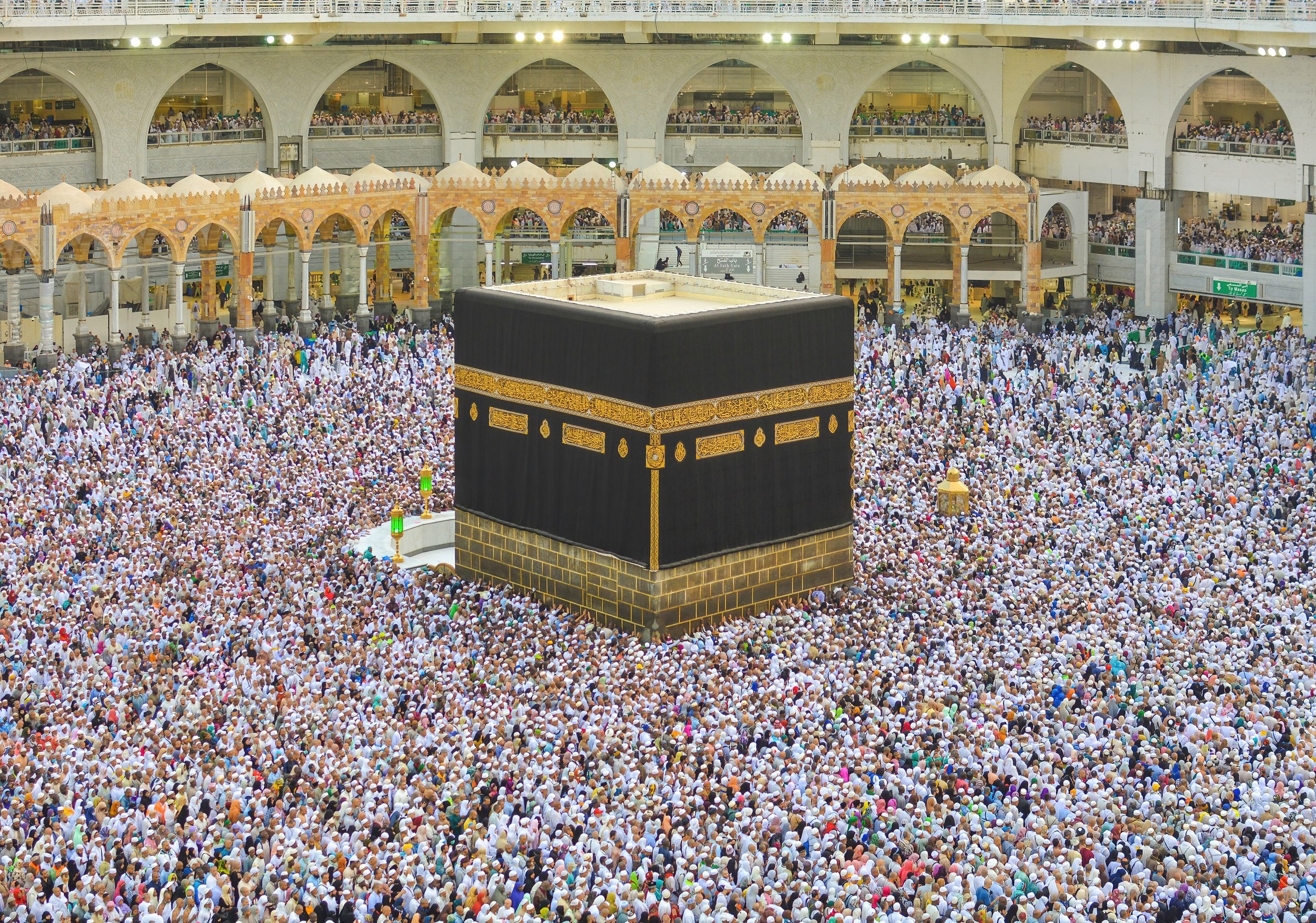
Pilgrims who have made the trip often say their patience was tested more than anything else: pushing in tawaf, queues for the lifts, a guard sending you the long way round.
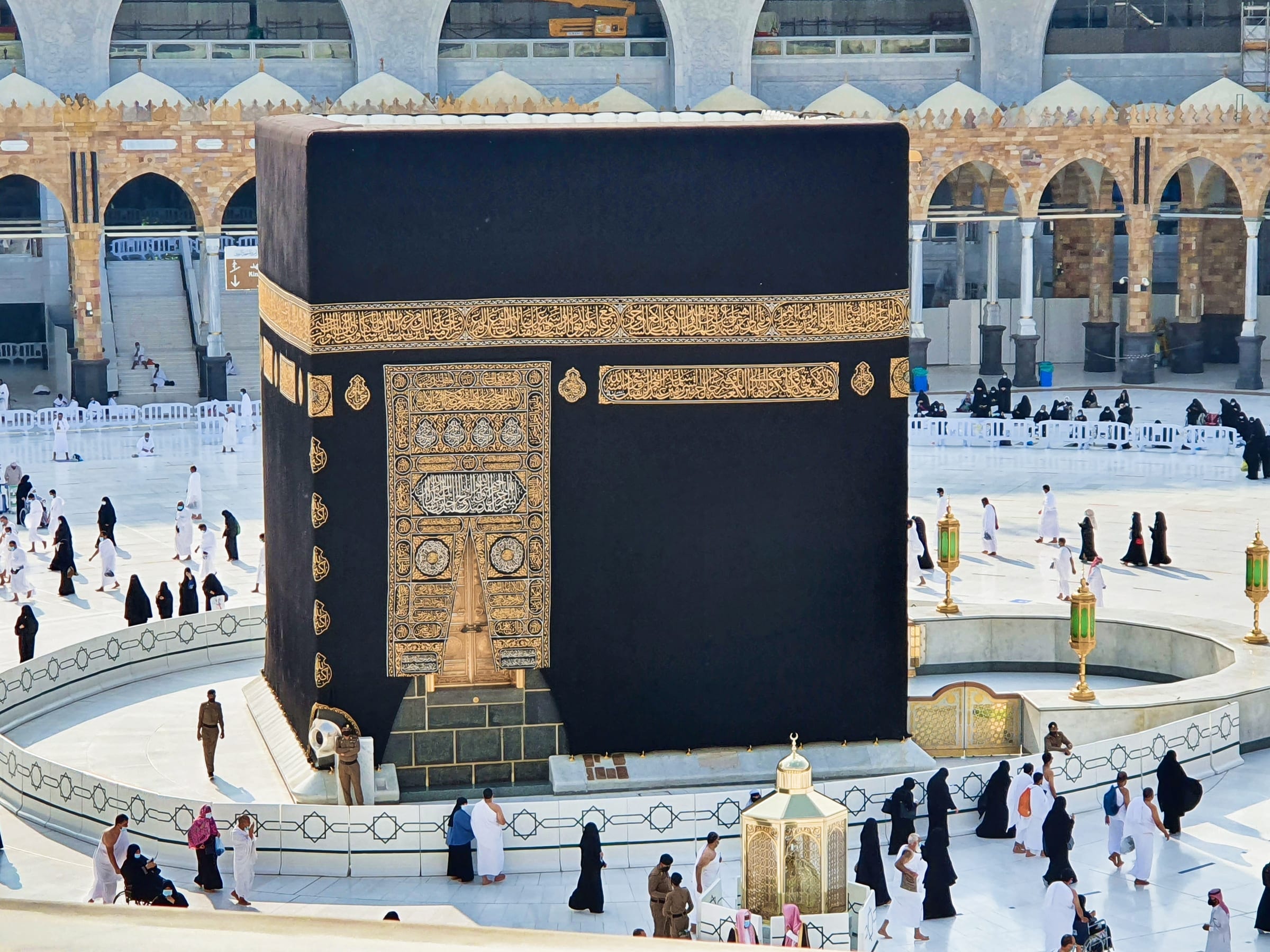
- The crowd is tightest near the Black Stone. You don't need to touch it: point to it from where you are and say "Allāhu akbar", as the Prophet ﷺ did (al-Bukhari 1613).
- Walk at the pace of the people around you, and watch for wheelchairs, which share the floors with everyone else.
- When the prayer ends, stay seated for a few minutes. Everyone makes for the gates at once, and the rush passes quickly.
- If walking is hard, electric carts for tawaf and sa'i can be booked in the General Authority's Tanaqul app.
Finding your way, and each other
In ihram and abayas, every group looks the same from behind.
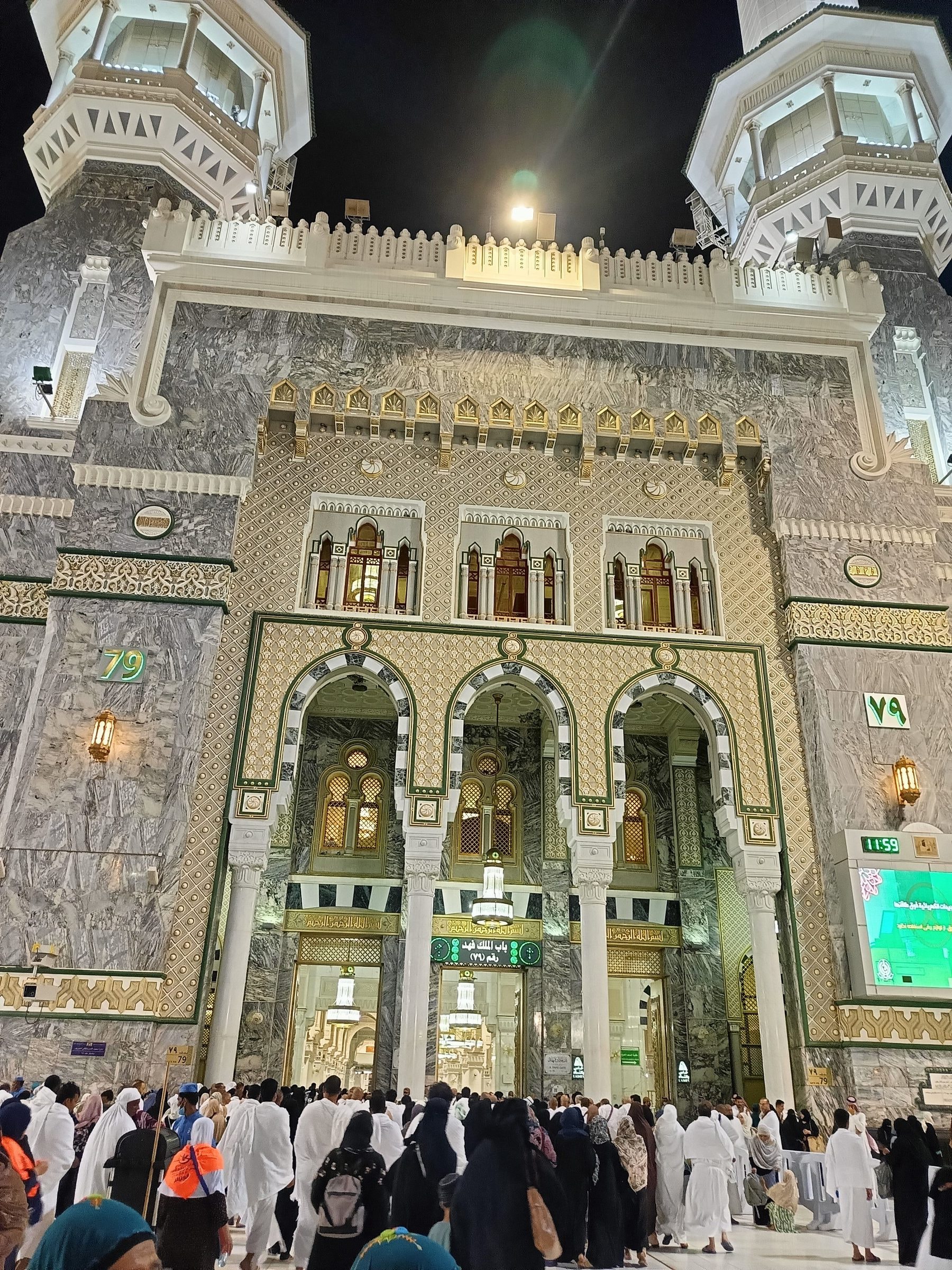
- Pick one gate number as your meeting point before you go in, and a second one in case the first is closed when that part of the mosque fills. Masjid al-Haram's gates shows where the main ones are.
- Take a photo of the gate number as you enter. The crowd may carry you out through another gate.
- For the same reason, carry your shoes in a small bag instead of leaving them on a rack.
- Share your live location with your family, and bring a power bank: a day of maps, calls and duas read from the screen drains a phone.
- For children, the General Authority hands out wristbands with the parents' phone numbers at King Abdulaziz Gate and King Fahd Gate. For older parents, slip a card into a pocket with your number and the hotel's name.
Zamzam
Zamzam containers stand all over the mosque, and some are marked as not chilled, for anyone who prefers it less cold. Drink it, and make dua as you drink. The toilets and wudu areas are out in the courtyards, though, so go easy on it before a long wait for the prayer: once you leave your place, you may not get it back.
In Madinah, don't over-plan the ziyarat
One morning is enough for the main ziyarat: Quba Mosque, Mount Uhud and Masjid al-Qiblatayn. Make wudu at your hotel before you set off for Quba. The Prophet ﷺ said: "Whoever purifies himself in his house, then comes to Quba Mosque and offers one prayer in it, will have a reward like that of an Umrah" (Ibn Majah 1412). Give the rest of your days in Madinah to the prayers in the Prophet's Mosque, your Rawdah visit, and some rest before Makkah if you're going there next.
Courtesy at the Haram
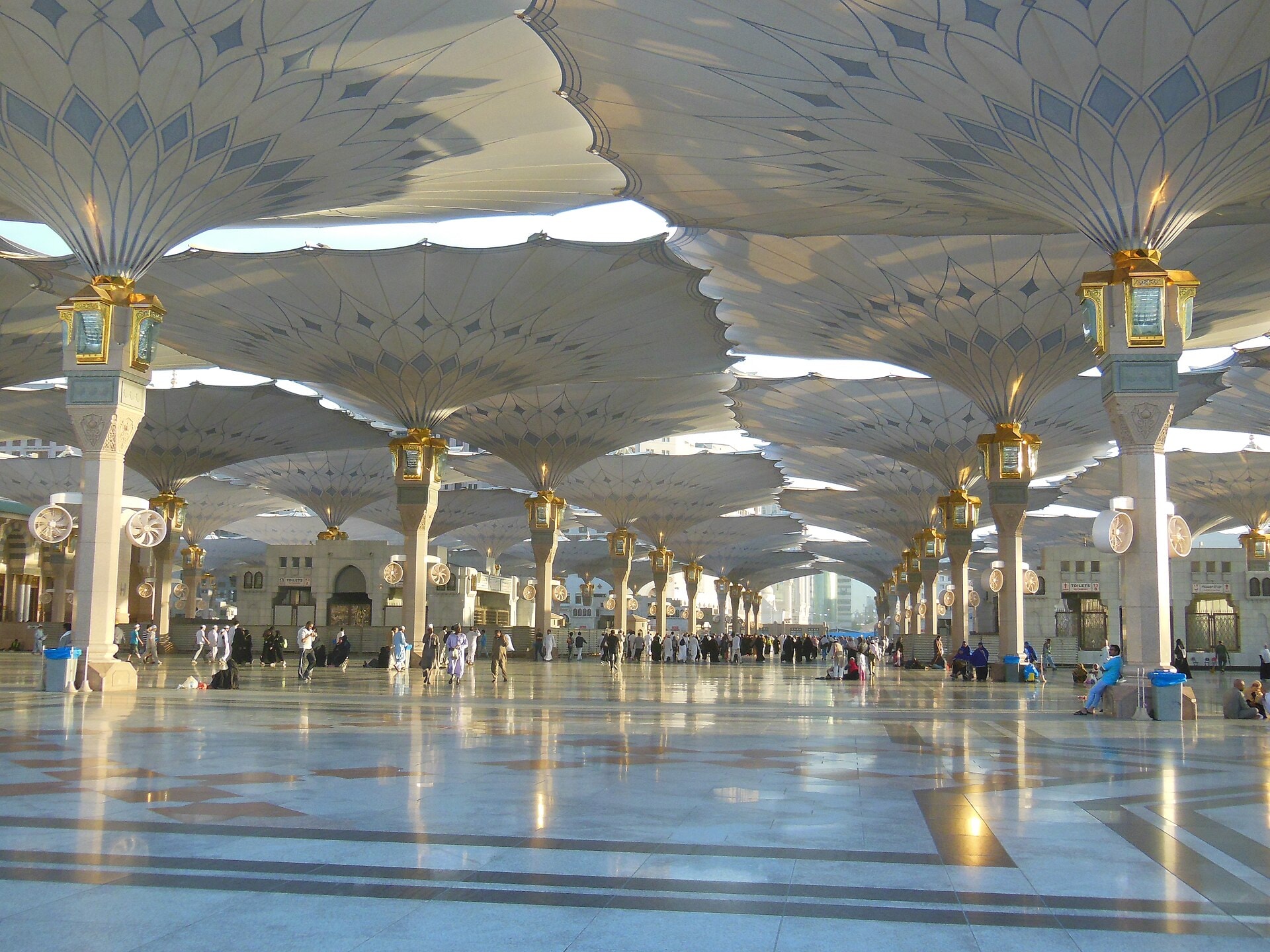
The General Authority asks visitors to Masjid al-Haram to:
- keep walkways and doorways clear, without sitting or spreading out in the passages and courtyards;
- make room for the elderly and people with disabilities, and help them;
- keep an eye on their children;
- make wudu only in the wudu areas.
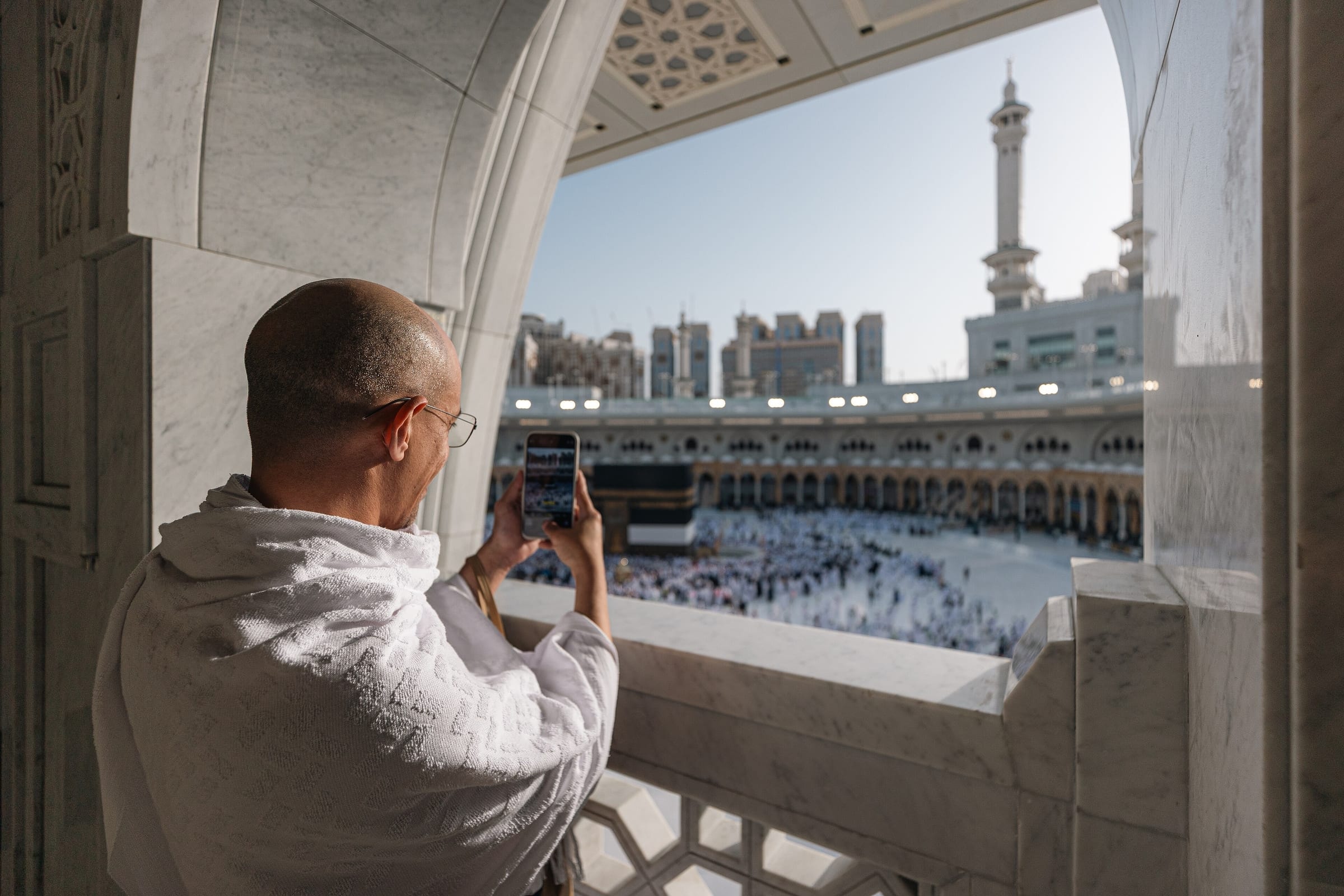
When the guards clear part of the mataf before a prayer, move when they ask. As for photos, the Ministry of Hajj and Umrah says you're free to record your time at the Haram, as long as you take the picture quickly, without disturbing people in tawaf or prayer. Leave other worshippers out of your videos.
Keep time for your own dua
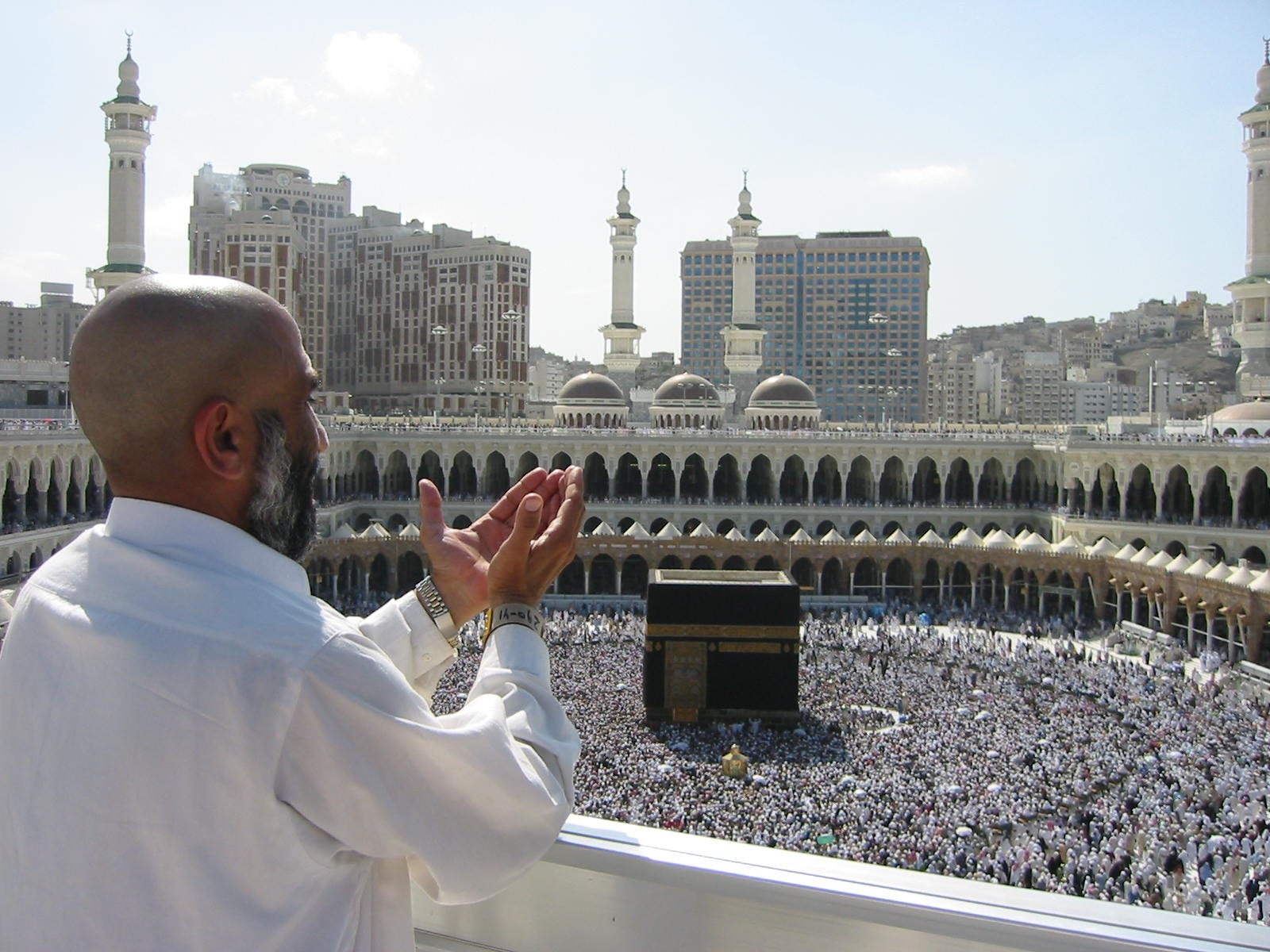
Before you go, write down your duas and the names of everyone who asked you to pray for them. Many pilgrims forget the whole list at their first sight of the Kaaba, and that's fine: you can make dua in your own words and your own language. Umrah duas gathers the few set words the Prophet ﷺ used.
Take your photo, then put the phone away. After Fajr, or late at night when the mosque is quieter, find a place facing the Kaaba and stay a while without a screen.
Find your hotel by the Haram
Compare the walk, the view and the price, then book in minutes.
See the hotelsSources
- Ministry of Hajj and Umrah: frequently asked questions · Checked 11 Nov 2026
- Nusuk: permit to visit Al-Rawdah Al-Sharifah · Checked 11 Nov 2026
- Ministry of Health: health requirements for Umrah, 1447H (2026) · Checked 11 Nov 2026
- Sahih al-Bukhari 1614: the Prophet's ﷺ first act on reaching Makkah · Checked 11 Nov 2026
- Sahih al-Bukhari 1613: pointing to the Black Stone · Checked 11 Nov 2026
- Sunan Ibn Majah 1412: prayer in Quba Mosque · Checked 11 Nov 2026
- Official site of Sheikh Ibn Baz: no harm in staying on in ihram before the Umrah (fatwa 14614) · Checked 11 Nov 2026
- Al-Madina: the General Authority for the Care of the Two Holy Mosques on crowd times in Masjid al-Haram (13 August 2026) · Checked 11 Nov 2026
- Pilgrim Experience Program: live crowd levels in the mataf and the Mas'a (21 April 2026) · Checked 11 Nov 2026
- Pilgrim Experience Program: booking carts for tawaf and sa'i (12 March 2026) · Checked 11 Nov 2026
- Okaz: identification wristbands for children at Masjid al-Haram (14 December 2025) · Checked 11 Nov 2026
- Al-Madina: the General Authority's guidance for visitors to Masjid al-Haram (26 July 2026) · Checked 11 Nov 2026
- Ajel: the Ministry of Hajj and Umrah on taking photos in the Haram (2 September 2024) · Checked 11 Nov 2026
- Diyanet Hac ve Umre Hizmetleri: 2026-2027 umre turları ve yetkili acenteler listesi · Checked 11 Nov 2026
- Gazete Birlik: Diyanet 2026-2027 umre başvurularını başlattı (16 May 2026) · Checked 11 Nov 2026
- Kompas TV: cara cek travel umrah resmi di aplikasi SatuHaji Kemenhaj (2 July 2026) · Checked 11 Nov 2026
- MyGOV (MOTAC): carian agensi umrah berlesen · Checked 11 Nov 2026