Tawaf and sa'i in Umrah: distances, floors and timings
How long tawaf and sa'i take, the distance from Safa to Marwah, which floor to choose, and what to do if the prayer starts, wudu breaks or you lose count.
The Jiwar team4 min read
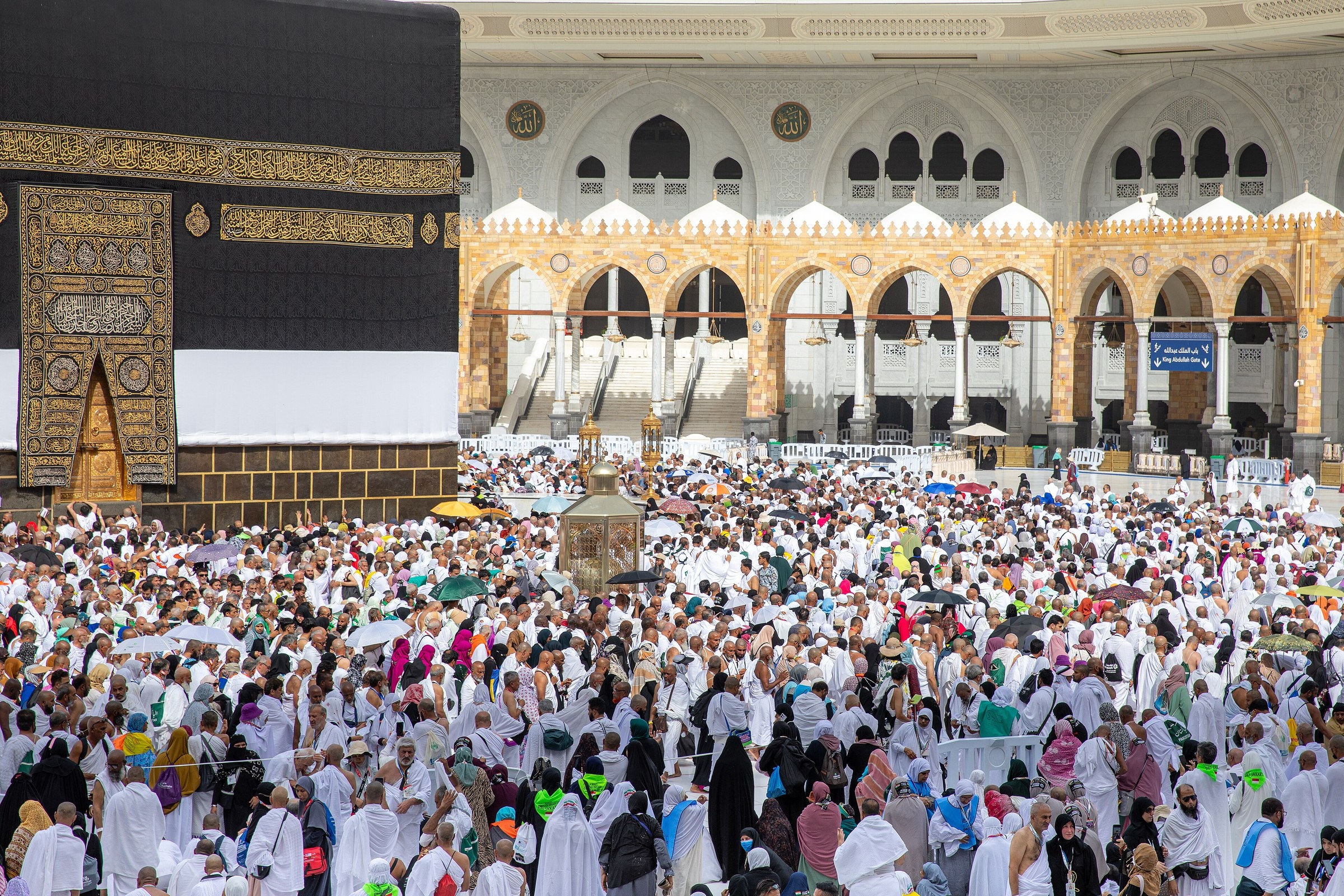
Tawaf and sa'i take up most of the time in an Umrah. This article covers what a step-by-step guide has no room for: how long each takes, which floor to use, and what to do if the prayer starts, your wudu breaks or you lose count. The rites themselves are in how to perform Umrah, and the words to say are in the duas of Umrah.
How long it takes
The General Authority for the Care of the Two Holy Mosques publishes average times for the rites. In Rabi' al-Akhir 1447 (September to October 2025), tawaf took 42 minutes on average and sa'i 46. The whole Umrah took 116 minutes, including about 15 minutes to get from the courtyards to the mataf and 3 from the mataf to the Mas'a.
In Ramadan it all takes longer. Our article on the best time for Umrah has the quieter months.
Tawaf: which floor
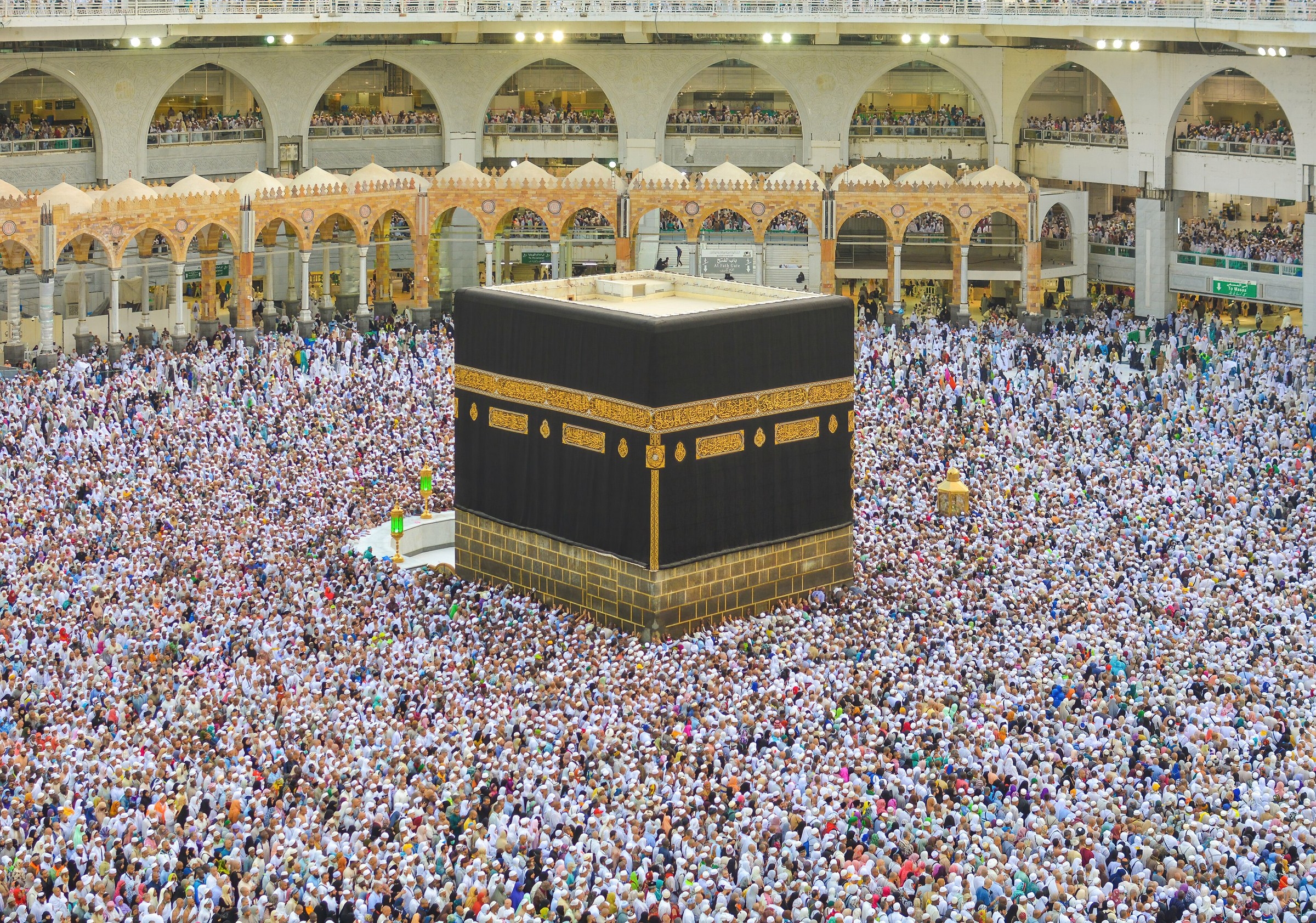
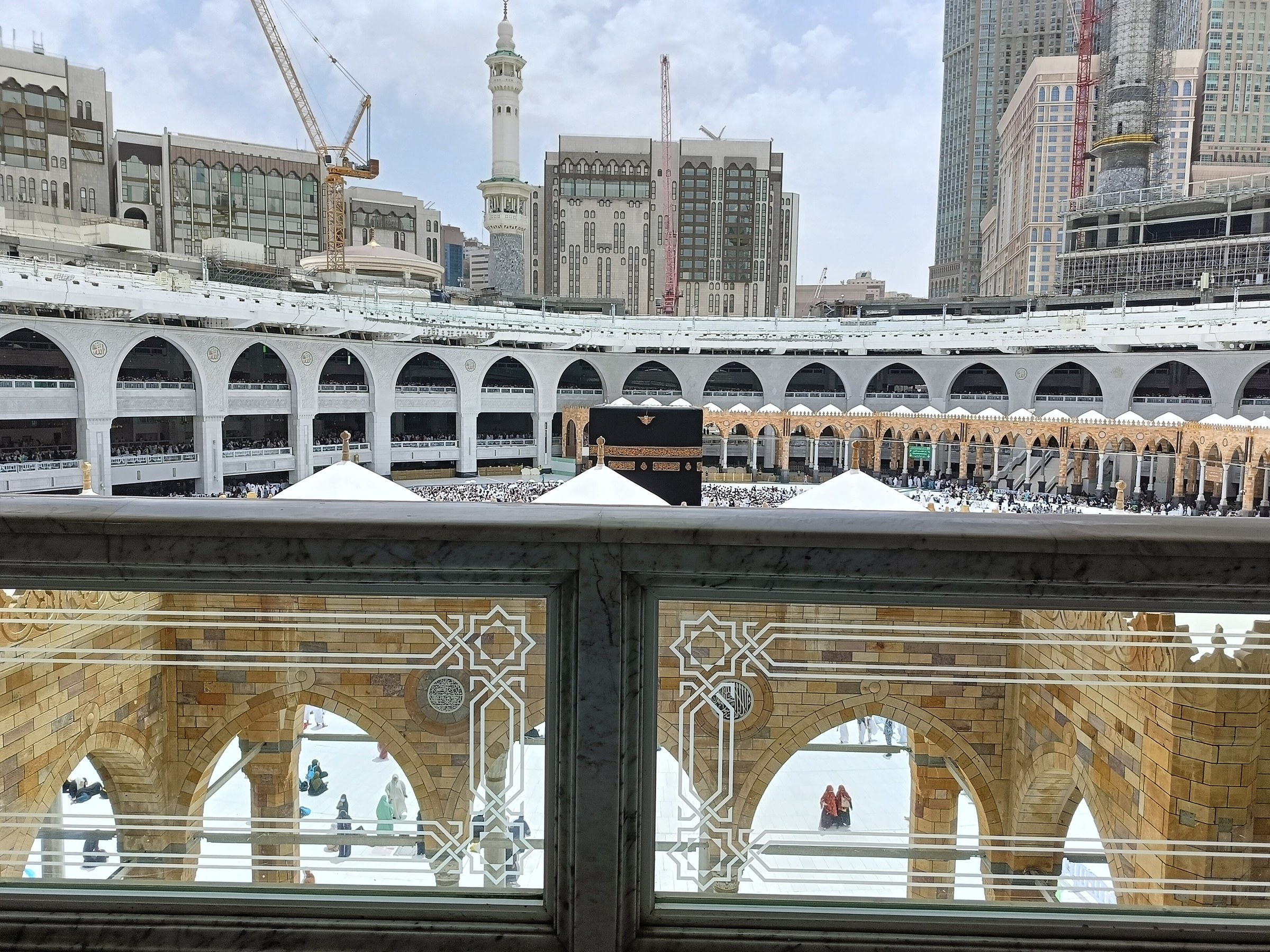
In the open courtyard around the Kaaba (the mataf), the rounds are shortest. In the authority's figures, 92% of pilgrims did their tawaf there. At busy times it is kept for pilgrims in ihram.
The tawaf is valid on any floor of Masjid al-Haram and its extensions. On the first floor and the roof the rounds are longer, because the circle is wider, but the crowd is lighter. Green lights on the upper floors mark the line of the Black Stone, where each round begins and ends. Wheelchairs and electric carts go round up there too.
Sa'i: the distance and the floors
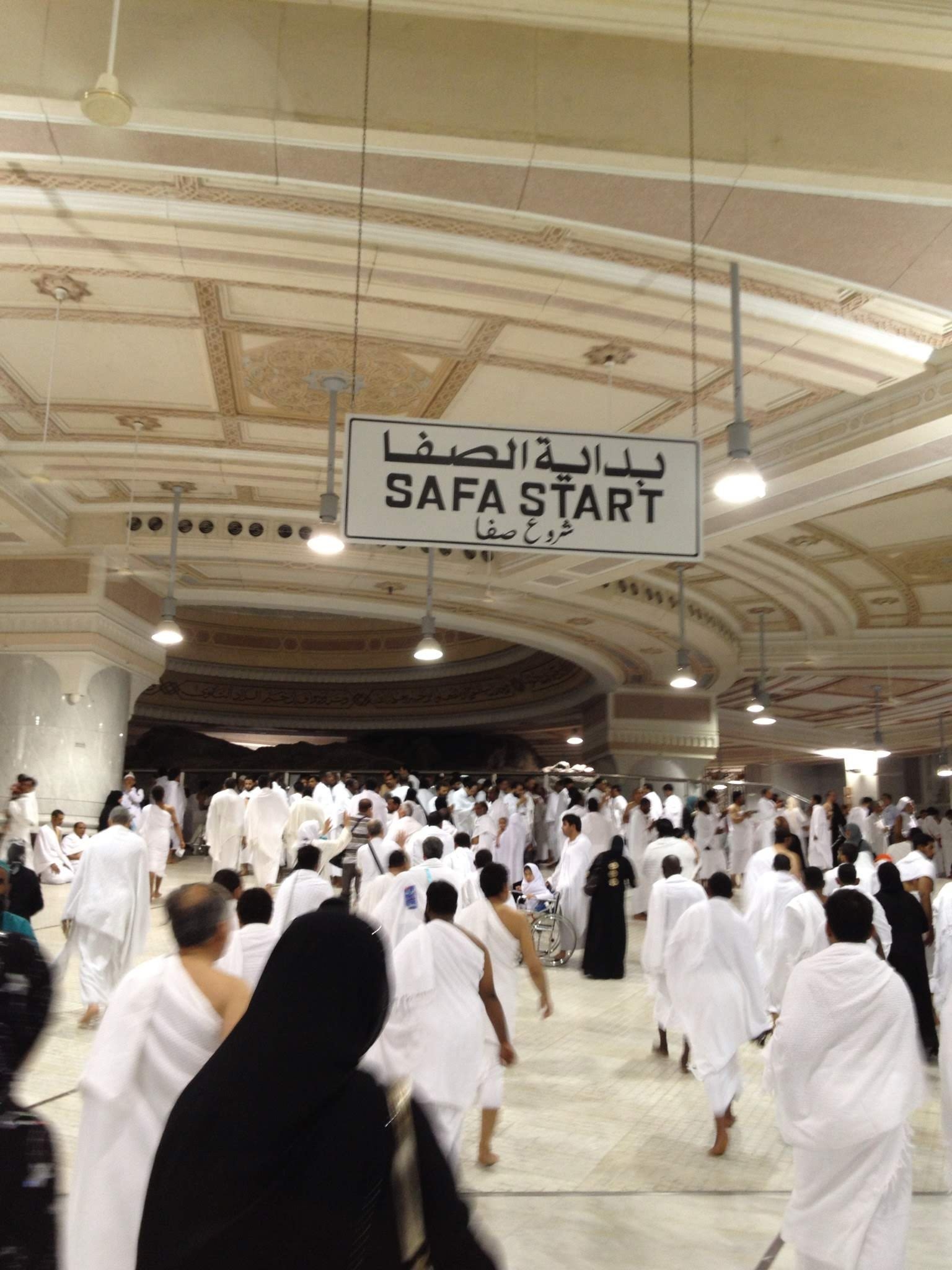
The Mas'a, the gallery between Safa and Marwah, is 394 metres long and 40 metres wide, on four floors, so the seven laps come to about 2.76 km, according to the Pilgrim Experience Program. It holds 118,000 people an hour, and in the authority's figures 83% of pilgrims did their sa'i on the ground floor.
Start at Safa; signs in the Mas'a show where. Safa to Marwah is one lap and the way back is the second, so the seventh ends at Marwah. Between the green lights, men go at a jog if they can, and women walk as usual.
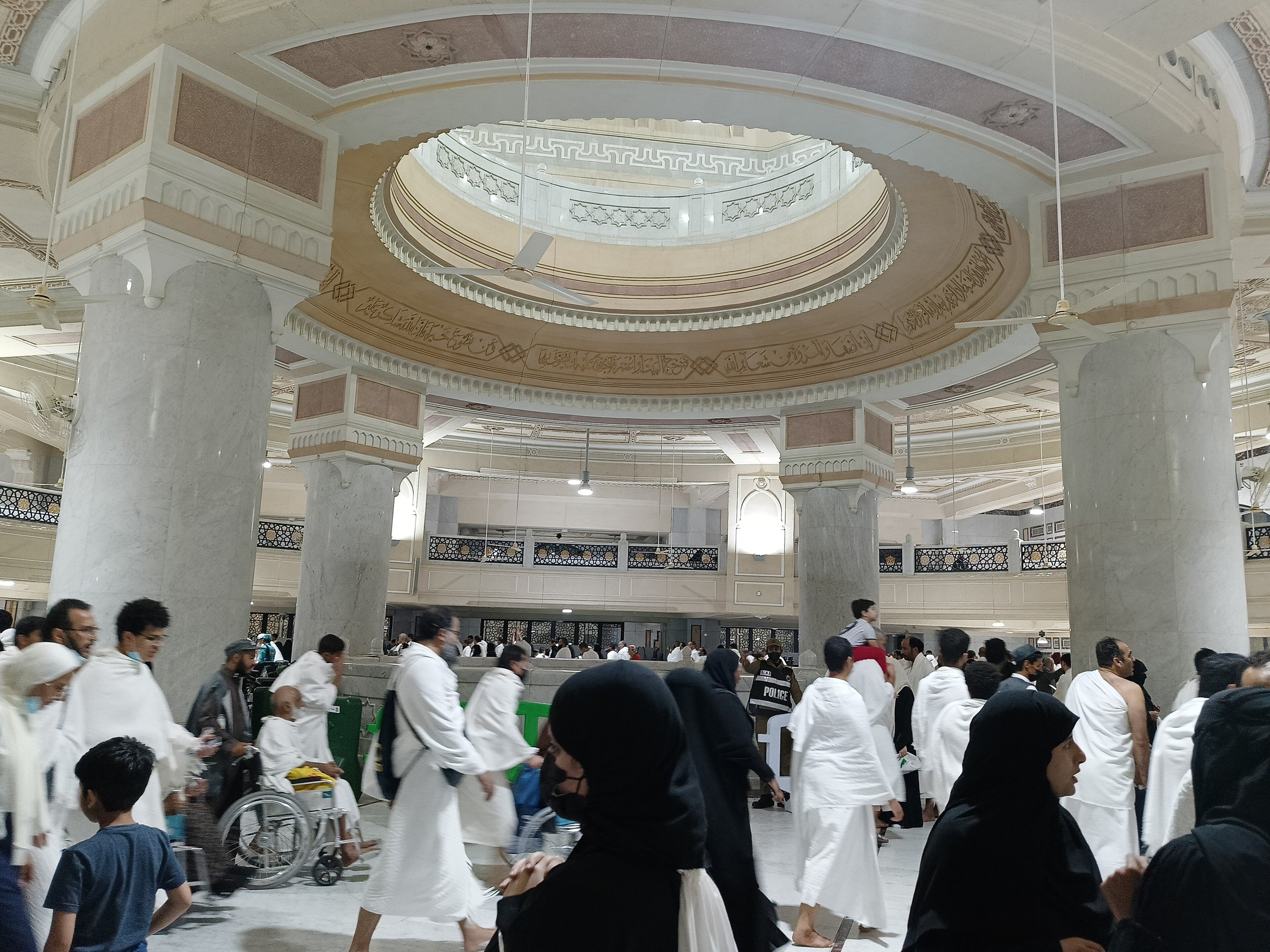
You can do the sa'i in a wheelchair or a cart. Ibn Baz's guide to Umrah, published by the Presidency for the Religious Affairs of the Two Holy Mosques, says there is no harm in doing it riding, especially when there is a need. Wudu is recommended for sa'i but not required.
Wheelchairs and carts
The authority has about 400 electric carts and more than 6,000 wheelchairs at Masjid al-Haram (March 2026), and the electric carts are booked in the Tanaqol app. Free wheelchairs for the elderly and people with disabilities are lent in the courtyards: ask the staff. There's more in Umrah with elderly parents.
The intention
You don't need special words for tawaf or sa'i. The intention you made for Umrah at the miqat covers both. The intention lives in the heart, and the Shafi'i scholar Nawawi al-Bantani notes that renewing it as the tawaf begins is sunnah for someone in ihram, not a condition. If you'd like to bring it to mind, "seven rounds of tawaf for my Umrah, for Allah" is enough. No dua belongs to a particular round.
If the prayer starts
If the iqamah is called while you are in tawaf or sa'i, pray with the congregation where you are, then carry on from that spot. You don't go back to the Black Stone or repeat the round (Ibn Baz, Majmu' al-Fatawa 17/216). Some scholars say to begin that round again from the Black Stone.
If your wudu breaks
Most scholars hold that tawaf needs wudu. If yours breaks, leave the tawaf, renew it and come back. The Hanafi and Shafi'i schools let you continue from where you stopped; the Maliki and Hanbali schools start the tawaf again. Sa'i is valid without wudu, so there you simply carry on.
If you lose count
If you are unsure in the middle of the tawaf, go by the smaller number: if you can't tell whether it was the fifth round or the sixth, count it as the fifth. Ibn Qudama records in al-Mughni that the scholars agree on this. A doubt that comes after you have finished doesn't count, in the view of most scholars. A small tally counter or a string of beads helps you keep track.
If you can, do your tawaf near the Kaaba at a quiet hour. If the crowd or the heat is too much, take the upper floors or a cart: the seven rounds count just the same.
Hotels near Masjid al-Haram
Compare the walk, the view and the price, then book in minutes.
See the hotelsSources
- Pilgrim Experience Program: the length and capacity of the Mas'a (18 March 2024) · Checked 28 Oct 2026
- Okaz: the General Authority's average times for Umrah, tawaf and sa'i in Rabi' al-Akhir 1447 (26 October 2025, Arabic) · Checked 28 Oct 2026
- Pilgrim Experience Program: electric carts and wheelchairs at the Two Holy Mosques (3 March 2026) · Checked 28 Oct 2026
- Gulf News: free and paid wheelchairs at the Grand Mosque (10 August 2024) · Checked 28 Oct 2026
- Presidency for the Religious Affairs of the Two Holy Mosques: The Manner of Performing Umrah (Ibn Baz, 2025 edition) · Checked 28 Oct 2026
- Ministry of Hajj and Umrah: Sa'i · Checked 27 Oct 2026
- IslamQA 36850: stopping tawaf or sa'i for the prayer, quoting Ibn Baz, Majmu' al-Fatawa 17/216 (Arabic) · Checked 28 Oct 2026
- IslamQA 145246: losing wudu during tawaf, citing al-Mawsu'a al-Fiqhiyya 29/131 (Arabic) · Checked 28 Oct 2026
- IslamQA 171308: doubt over the number of rounds, citing Ibn Qudama, al-Mughni 3/187 (Arabic) · Checked 28 Oct 2026
- NU Online: the nine conditions of tawaf (21 August 2018, Indonesian) · Checked 28 Oct 2026