Umrah on behalf of someone: who, how and the niyyah
How to perform Umrah for a parent who has died, or someone too old or ill to travel: who it is for, the conditions, the niyyah and the steps.
3 min read

You can perform Umrah for a parent who has died, or for a relative too old or too ill to travel. An Umrah on someone's behalf, often called badal Umrah, has the same rites as your own: the difference is that you intend it for them. A man told the Prophet ﷺ that his father was very old and could neither perform Hajj nor Umrah nor travel, and he said: "Perform Hajj and Umrah on behalf of your father" (Abu Dawud).
Who you can perform it for
- Someone who has died, whether or not they performed Umrah in their lifetime. A woman of Juhaynah asked about her mother, who had vowed to perform Hajj and died before she could. The Prophet ﷺ said: "Yes, perform Hajj on her behalf. If your mother had owed a debt, would you not have paid it? Pay Allah's debt, for Allah is more deserving of payment" (al-Bukhari).
- Someone alive who can't make the journey and isn't expected to recover, through old age or a chronic illness. The Maliki school doesn't allow it for the living.
- For someone alive and well enough to go themselves, most scholars say it isn't done.
A man can perform it for a woman, and a woman for a man. A woman of Khath'am asked the Prophet ﷺ whether she could perform Hajj for her father, and he said: "Yes" (al-Bukhari).
The conditions
- Perform your own Umrah first. The Prophet ﷺ heard a man say "Labbayk on behalf of Shubrumah" and asked whether he had performed Hajj for himself. When he said no, the Prophet ﷺ told him: "Perform Hajj for yourself, then perform it for Shubrumah" (Abu Dawud). The Shafi'i and Hanbali schools make this a condition. The Hanafi and Maliki schools count it valid but disliked.
- One Umrah is for one person. To perform Umrah for both parents, perform two.
- Each Umrah needs its own permit in the Nusuk app.
The niyyah
When you enter ihram at the miqat, intend the Umrah for them and say: "Labbayka 'umratan 'an [their name]", meaning "Here I am for an Umrah on behalf of [name]". If you forget the name, the intention in your heart is enough. Then recite the usual talbiyah until you begin tawaf.
The steps
The rites are those of your own Umrah: ihram, tawaf, sa'i, then shaving or cutting the hair, as our guide to performing Umrah step by step explains. Make plenty of dua for them during tawaf and sa'i. The hair you cut is your own.
If you are already in Makkah
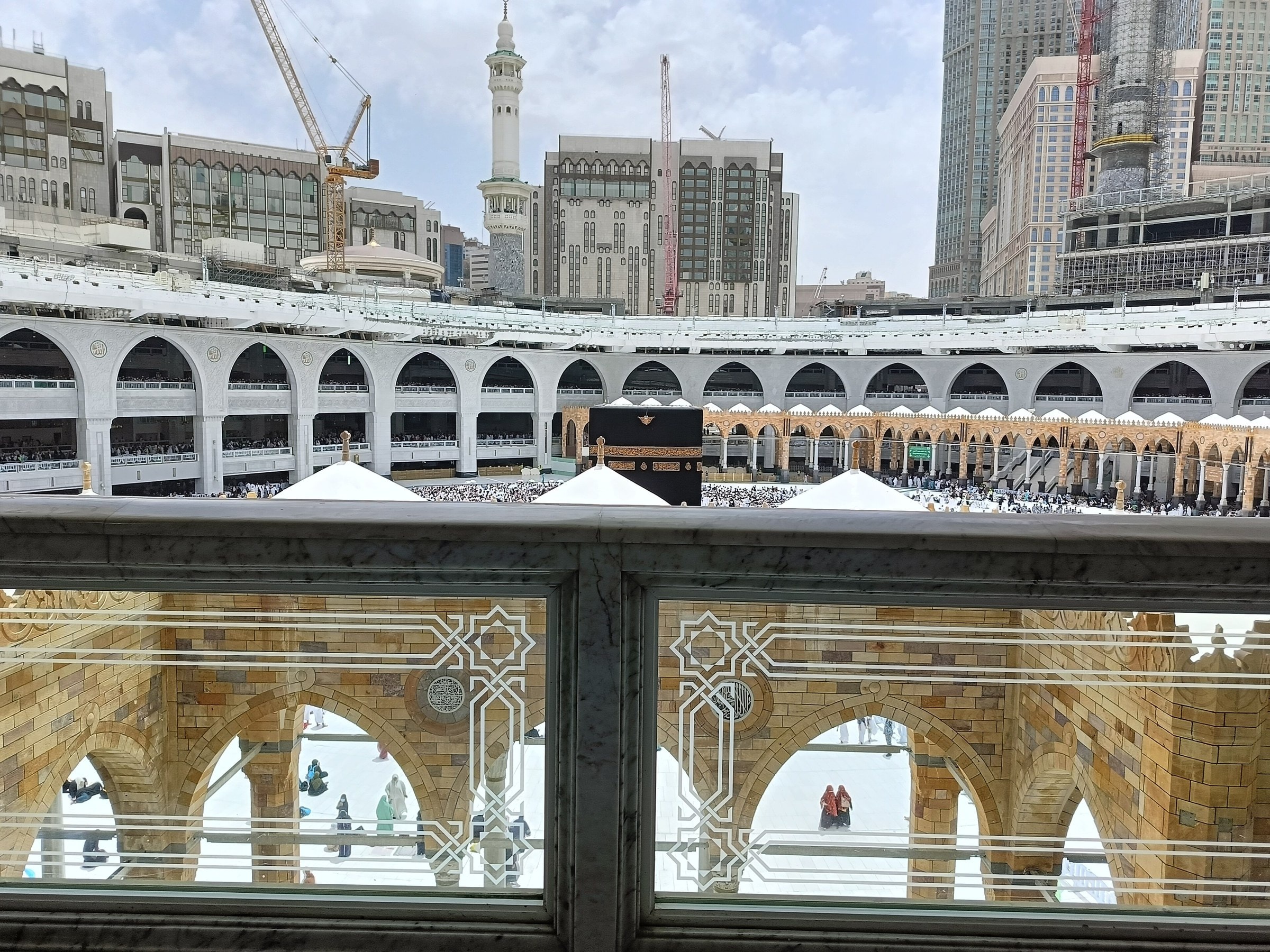
If you have performed your own Umrah and want to perform one for someone else, go outside the Haram boundary to put on ihram. Most people go to Masjid Aisha at Tan'eem, about 7 km from Masjid al-Haram, then come back to the Haram for tawaf and sa'i. A day's rest between the two Umrahs makes it easier.

If you can't travel yourself
You can ask someone you trust who is going for Umrah, or who lives in Makkah, to perform it, and cover their costs. Choose someone you know who has performed their own Umrah, and give them the person's full name.
Common questions
Must the person have asked for it before they died?
No. You can perform Umrah for them even if they left no such wish.
Can I perform Umrah for several people on one trip?
Yes, one Umrah for each, each with its own ihram from outside the Haram boundary. Some scholars dislike performing many Umrahs on one trip, and say tawaf is better for anyone already in Makkah.
For the duas to make for them in tawaf and sa'i, read our Umrah duas.
Find your hotel by the Haram
Compare the walk, the view and the price, then book in minutes.
See the hotelsSources
- Sunan Abi Dawud 1810: Hajj and Umrah on behalf of an old father · Checked 9 Nov 2026
- Sunan Abi Dawud 1811: perform your own first (Shubrumah) · Checked 9 Nov 2026
- Sahih al-Bukhari 1513: the woman of Khath'am · Checked 9 Nov 2026
- Sahih al-Bukhari 1852: on behalf of a mother who died · Checked 9 Nov 2026