Umrah duas: the talbiyah, tawaf and sa'i, with meanings
The duas of Umrah in the order you need them: the travel dua, the talbiyah, tawaf, Safa and Marwah, in Arabic with a transliteration and the meaning.
The Jiwar team6 min read
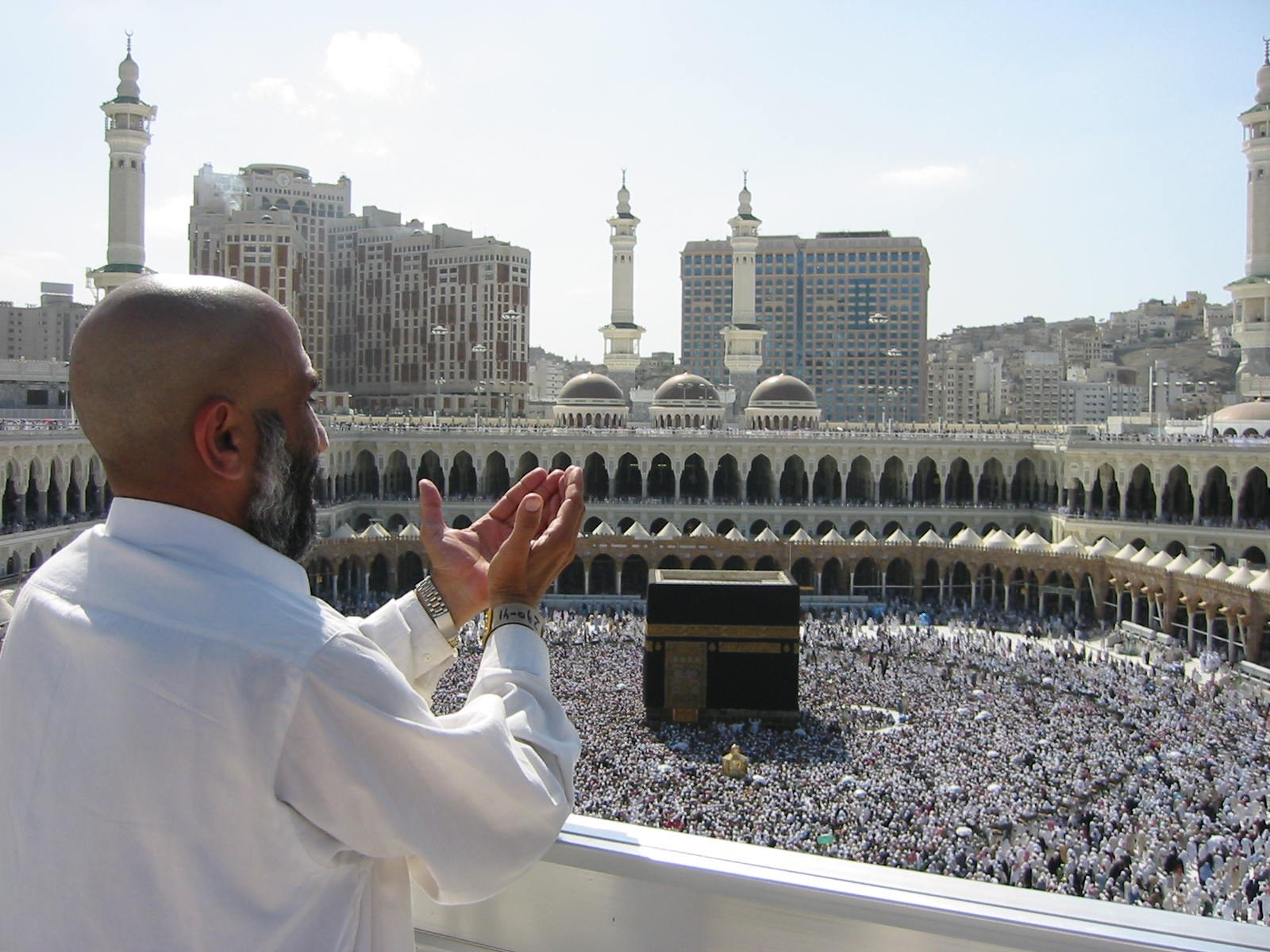
Most of Umrah is dua in your own words, in any language. At a few points the Prophet ﷺ used set words, and they are gathered here in the order you reach them, each with its reference. The rites themselves are in how to perform Umrah.
Booklets sold in Makkah often give a separate dua for each round of tawaf and each lap of sa'i. You can read them as ordinary duas, but none of them belongs to a particular round: the Presidency for the Religious Affairs of the Two Holy Mosques says no dhikr or dua is set for tawaf. Ask Allah for whatever you need.
Setting off
Once you are seated for the journey, say "Allāhu akbar" three times, then the dua the Prophet ﷺ said when he set out on a journey (Muslim 1342):
سُبْحَانَ الَّذِي سَخَّرَ لَنَا هَذَا وَمَا كُنَّا لَهُ مُقْرِنِينَ، وَإِنَّا إِلَى رَبِّنَا لَمُنْقَلِبُونَ، اللَّهُمَّ إِنَّا نَسْأَلُكَ فِي سَفَرِنَا هَذَا الْبِرَّ وَالتَّقْوَى، وَمِنَ الْعَمَلِ مَا تَرْضَى، اللَّهُمَّ هَوِّنْ عَلَيْنَا سَفَرَنَا هَذَا وَاطْوِ عَنَّا بُعْدَهُ، اللَّهُمَّ أَنْتَ الصَّاحِبُ فِي السَّفَرِ، وَالْخَلِيفَةُ فِي الأَهْلِ، اللَّهُمَّ إِنِّي أَعُوذُ بِكَ مِنْ وَعْثَاءِ السَّفَرِ، وَكَآبَةِ الْمَنْظَرِ، وَسُوءِ الْمُنْقَلَبِ فِي الْمَالِ وَالأَهْلِ
"Subḥāna lladhī sakhkhara lanā hādhā wa mā kunnā lahū muqrinīn, wa innā ilā rabbinā la-munqalibūn. Allāhumma innā nas'aluka fī safarinā hādhā l-birra wa t-taqwā, wa mina l-'amali mā tarḍā. Allāhumma hawwin 'alaynā safaranā hādhā wa-ṭwi 'annā bu'dah. Allāhumma anta ṣ-ṣāḥibu fi s-safar, wa l-khalīfatu fi l-ahl. Allāhumma innī a'ūdhu bika min wa'thā'i s-safar, wa ka'ābati l-manẓar, wa sū'i l-munqalabi fi l-māli wa l-ahl."
Glory be to the One who has placed this at our service, when we could never have managed it ourselves, and to our Lord we will return. O Allah, on this journey we ask You for goodness and piety, and for deeds that please You. O Allah, make this journey easy for us and shorten its distance. O Allah, You are our Companion on the journey and the One who looks after our families. O Allah, I seek refuge in You from the hardship of travel, from distressing sights, and from coming home to harm in our wealth or our families.
The intention and the talbiyah at the miqat
Make the intention in your heart and say:
لَبَّيْكَ عُمْرَةً
"Labbayka 'umrah": here I am, for Umrah. If you fear that something may stop you finishing, add a condition:
فَإِنْ حَبَسَنِي حَابِسٌ فَمَحِلِّي حَيْثُ حَبَسْتَنِي
"Fa-in ḥabasanī ḥābis, fa-maḥillī ḥaythu ḥabastanī": if anything holds me back, my ihram ends wherever You hold me back.
Then begin the talbiyah (al-Bukhari 1549) and repeat it until you reach the Kaaba, men aloud and women quietly:
لَبَّيْكَ اللَّهُمَّ لَبَّيْكَ، لَبَّيْكَ لاَ شَرِيكَ لَكَ لَبَّيْكَ، إِنَّ الْحَمْدَ وَالنِّعْمَةَ لَكَ وَالْمُلْكَ، لاَ شَرِيكَ لَكَ
"Labbayka Allāhumma labbayk, labbayka lā sharīka laka labbayk, inna l-ḥamda wa n-ni'mata laka wa l-mulk, lā sharīka lak."
Here I am, O Allah, here I am. Here I am, You have no partner, here I am. All praise and blessing are Yours, and the dominion. You have no partner.
Entering Masjid al-Haram
As at any mosque, say on the way in (Muslim 713):
اللَّهُمَّ افْتَحْ لِي أَبْوَابَ رَحْمَتِكَ
"Allāhumma ftaḥ lī abwāba raḥmatik": O Allah, open for me the gates of Your mercy.
Tawaf
When you touch the Black Stone, say "Bismillāh, wallāhu akbar" (in the name of Allah, and Allah is the greatest), as the Presidency's guide teaches. If you can only point to it, say "Allāhu akbar" (al-Bukhari 1613). Do the same each time you pass it.
Touch the Yemeni corner if you can reach it and say "Bismillāh, wallāhu akbar". If you can't, walk on without pointing or saying anything there.
In every round, between the Yemeni corner and the Black Stone, say what the Prophet ﷺ said there (Abu Dawud 1892):
رَبَّنَا آتِنَا فِي الدُّنْيَا حَسَنَةً وَفِي الْآخِرَةِ حَسَنَةً وَقِنَا عَذَابَ النَّارِ
"Rabbanā ātinā fi d-dunyā ḥasanah, wa fi l-ākhirati ḥasanah, wa qinā 'adhāba n-nār": our Lord, give us good in this world and good in the Hereafter, and protect us from the punishment of the Fire (al-Baqarah 201).
For the rest of each round, pray in your own words, remember Allah or recite Quran. Many pilgrims carry a list of the people who asked them for a dua.
The Station of Ibrahim and Zamzam
When the Prophet ﷺ walked to the Station of Ibrahim after his tawaf, he recited (Muslim 1218):
وَاتَّخِذُوا مِنْ مَقَامِ إِبْرَاهِيمَ مُصَلًّى
"Wattakhidhū min maqāmi Ibrāhīma muṣallā": and take the Station of Ibrahim as a place of prayer (al-Baqarah 125). In the two rak'ahs after it he read Surat al-Kafirun and Surat al-Ikhlas after al-Fatihah.
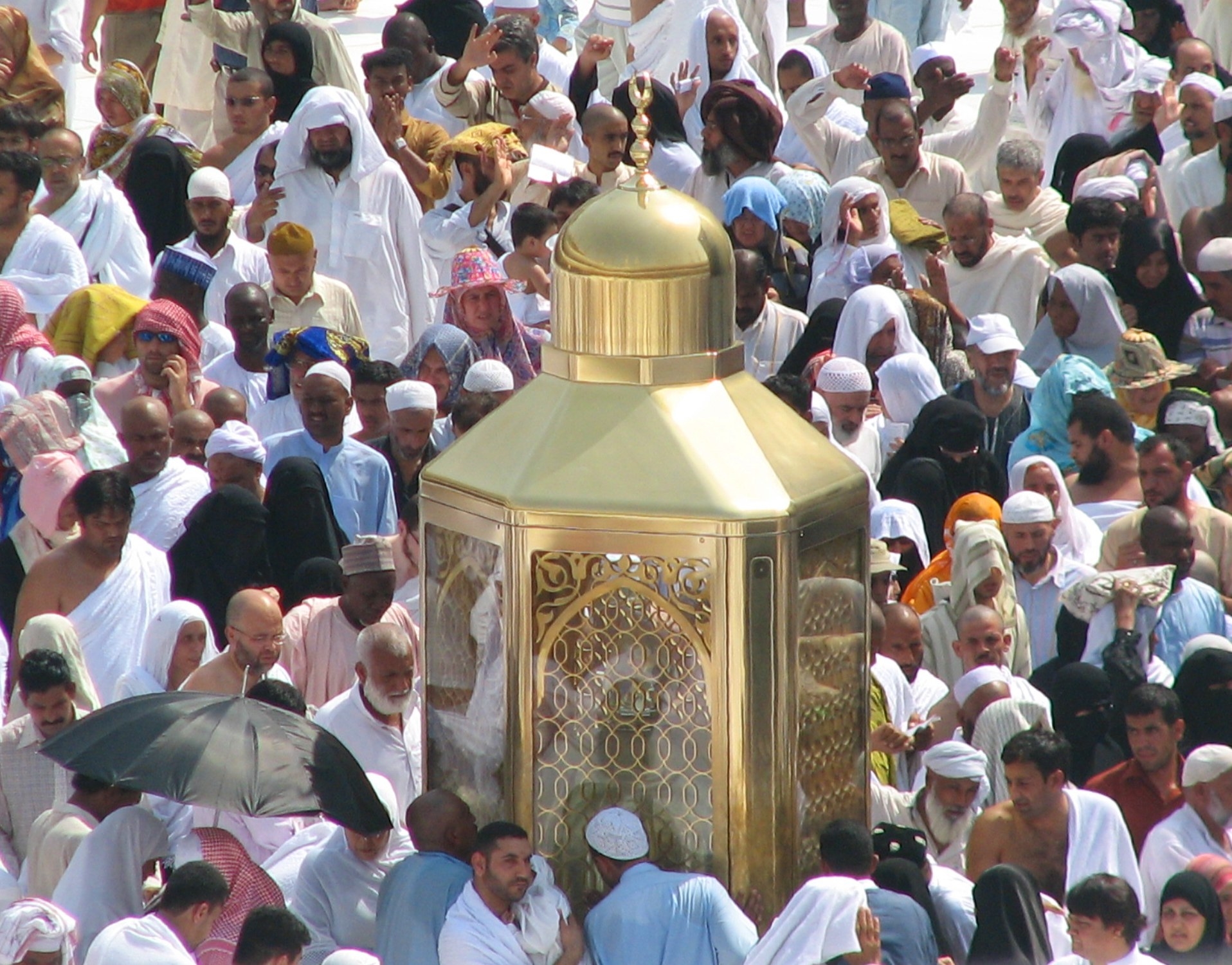
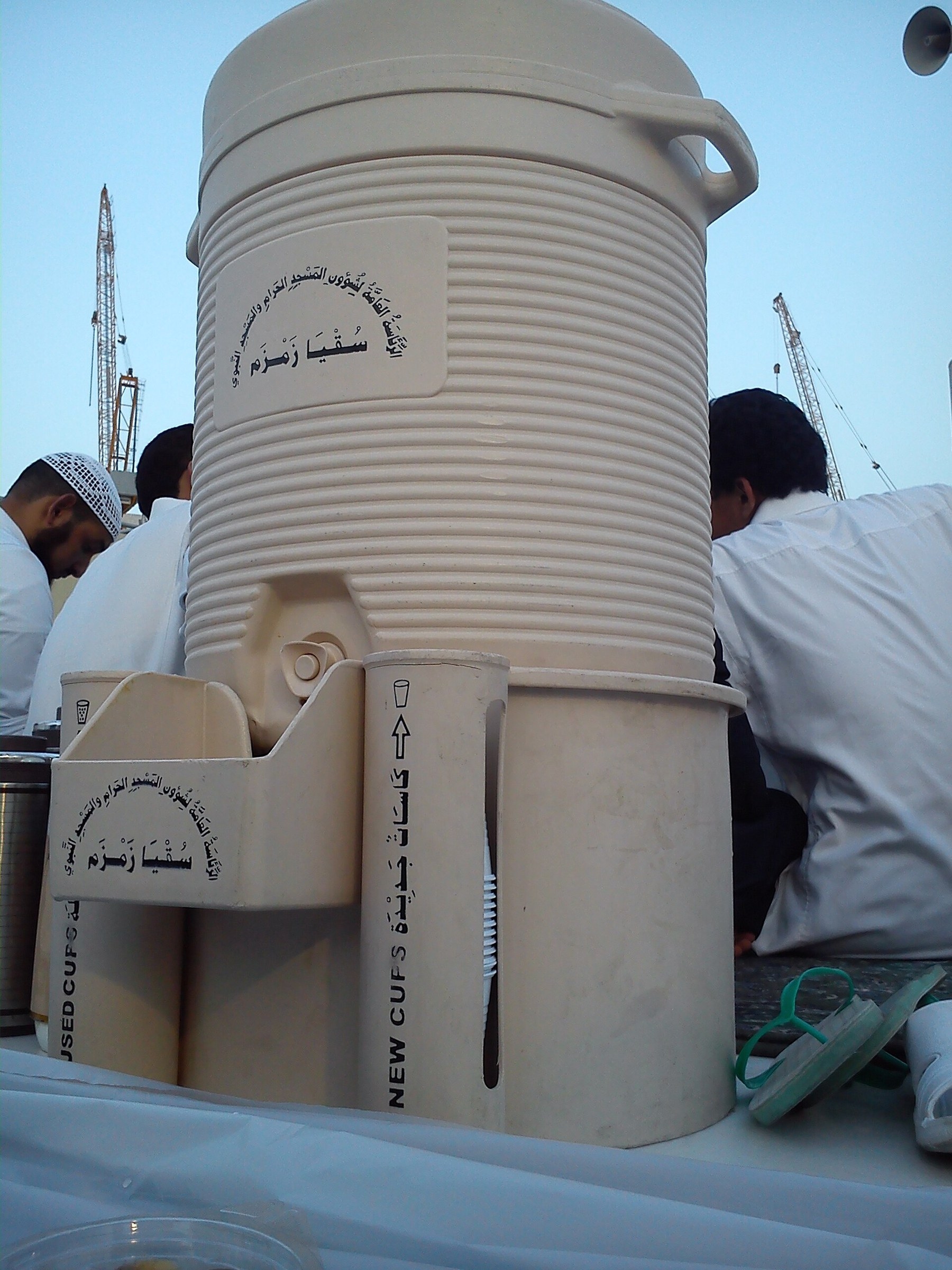
Then drink Zamzam, and ask Allah for what you need as you drink. The Prophet ﷺ said: "The water of Zamzam is for whatever it is drunk for" (Ibn Majah 3062; al-Albani graded it sound, and other scholars weak).
At Safa and Marwah
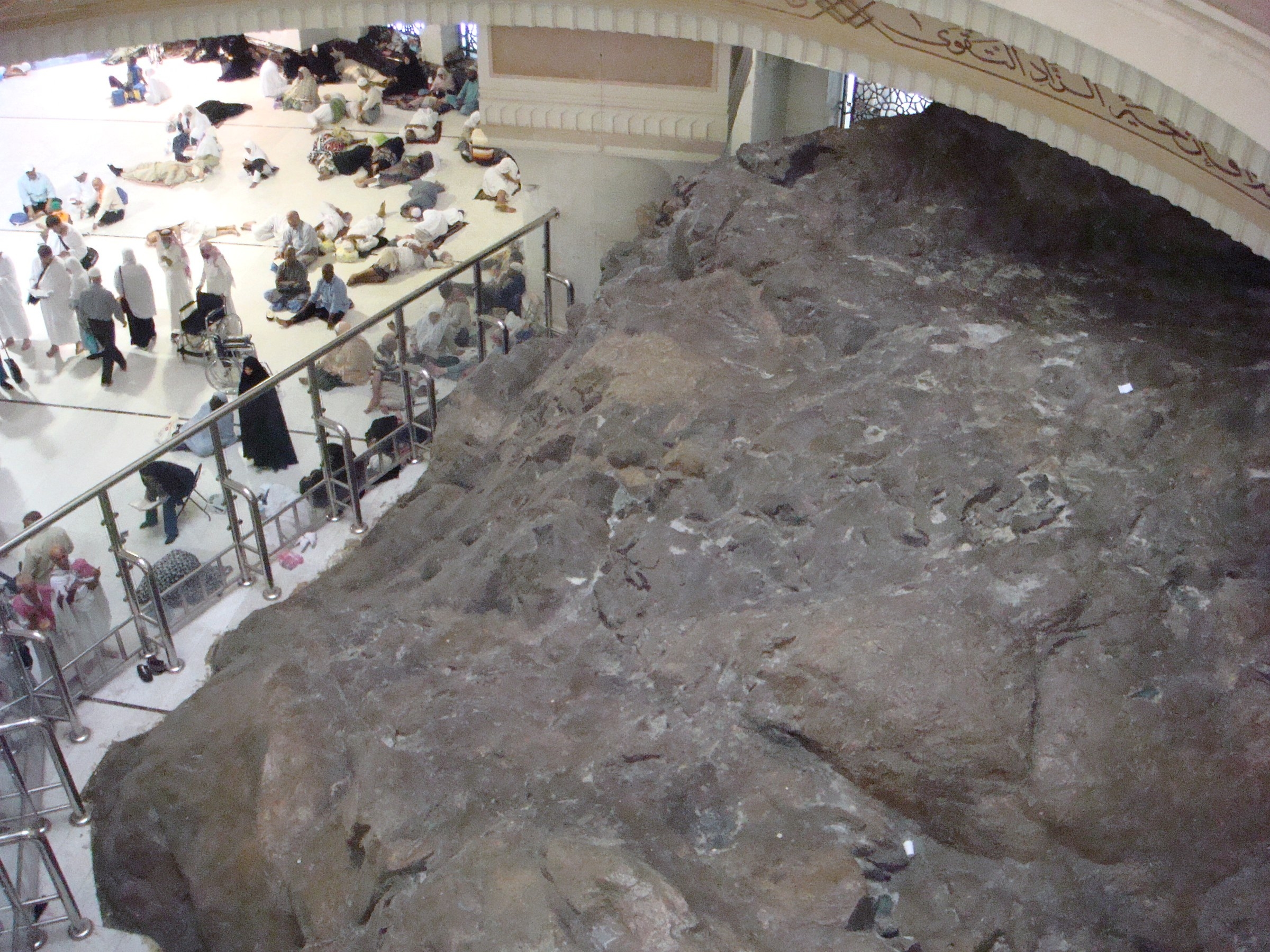
As you come near Safa for the first time, recite (Muslim 1218):
إِنَّ الصَّفَا وَالْمَرْوَةَ مِنْ شَعَائِرِ اللَّهِ
"Inna ṣ-Ṣafā wa l-Marwata min sha'ā'iri llāh": Safa and Marwah are among the symbols of Allah (al-Baqarah 158). Then say:
أَبْدَأُ بِمَا بَدَأَ اللَّهُ بِهِ
"Abda'u bimā bada'a llāhu bih": I begin with what Allah began with.
Climb Safa or stand at its foot, face the Kaaba, raise your hands, say "Allāhu akbar" and then:
لاَ إِلَهَ إِلاَّ اللَّهُ وَحْدَهُ لاَ شَرِيكَ لَهُ، لَهُ الْمُلْكُ وَلَهُ الْحَمْدُ، وَهُوَ عَلَى كُلِّ شَيْءٍ قَدِيرٌ، لاَ إِلَهَ إِلاَّ اللَّهُ وَحْدَهُ، أَنْجَزَ وَعْدَهُ، وَنَصَرَ عَبْدَهُ، وَهَزَمَ الأَحْزَابَ وَحْدَهُ
"Lā ilāha illa llāhu waḥdahu lā sharīka lah, lahu l-mulku wa lahu l-ḥamd, wa huwa 'alā kulli shay'in qadīr. Lā ilāha illa llāhu waḥdah, anjaza wa'dah, wa naṣara 'abdah, wa hazama l-aḥzāba waḥdah."
There is no god but Allah alone, with no partner. His is the dominion and His is the praise, and He has power over all things. There is no god but Allah alone. He kept His promise, gave victory to His servant, and alone defeated the confederates.
Say it three times, with your own duas in between. Do the same each time you reach Safa or Marwah, leaving out the verse and "Abda'u…", which belong only to the start. Between the two hills, remember Allah, make dua or recite what you know.
Leaving, and going home
On your way out of the mosque, say (Muslim 713):
اللَّهُمَّ إِنِّي أَسْأَلُكَ مِنْ فَضْلِكَ
"Allāhumma innī as'aluka min faḍlik": O Allah, I ask You of Your bounty.
No dua is set for shaving or cutting the hair, or for the end of the Umrah. On the journey home, say the travel dua again and add (Muslim 1342):
آيِبُونَ تَائِبُونَ عَابِدُونَ لِرَبِّنَا حَامِدُونَ
"Āyibūna tā'ibūna 'ābidūna li-rabbinā ḥāmidūn": we return, repenting, worshipping and praising our Lord.
Write your duas down before you travel: for yourself, your parents and everyone who asked you to pray for them. In the crowd at the Kaaba, a list in your pocket is more reliable than memory.
Hotels near Masjid al-Haram
Compare the walk, the view and the price, then book in minutes.
See the hotelsSources
- Presidency for the Religious Affairs of the Two Holy Mosques: The Manner of Performing Umrah (Ibn Baz, 2025 edition) · Checked 27 Oct 2026
- Ministry of Hajj and Umrah: Sa'i · Checked 27 Oct 2026
- Sahih Muslim 1342 · Checked 27 Oct 2026
- Sahih al-Bukhari 1549 · Checked 27 Oct 2026
- Sahih Muslim 713 · Checked 27 Oct 2026
- Sahih al-Bukhari 1613 · Checked 27 Oct 2026
- Sunan Abi Dawud 1892 · Checked 27 Oct 2026
- Sahih Muslim 1218 · Checked 27 Oct 2026
- Sunan Ibn Majah 3062 · Checked 27 Oct 2026