What to say to someone going for Umrah, and when they return
The duas the Prophet ﷺ used to see travellers off, how to ask a pilgrim to pray for you, what to say when they're back, and messages ready to send.
4 min read
Someone close to you is leaving for Umrah. Here are the words the Prophet ﷺ used when he saw people off, the dua they say as they leave home, how to ask them to pray for you, what to say when they come back, and a few messages you can copy and send. The duas of the Umrah itself, from the travel dua to sa'i, are in Umrah duas.
Seeing them off
أَسْتَوْدِعُ اللَّهَ دِينَكَ وَأَمَانَتَكَ وَخَوَاتِيمَ عَمَلِكَ
"Astawdi'u llāha dīnaka wa amānataka wa khawātīma 'amalik": I entrust to Allah your faith, what you are responsible for, and the last of your deeds. Whenever someone was setting off on a journey, Ibn Umar would say: "Come close, so I can bid you farewell as the Messenger of Allah ﷺ bade us farewell," and then say these words (Abu Dawud, at-Tirmidhi).
زَوَّدَكَ اللَّهُ التَّقْوَى، وَغَفَرَ ذَنْبَكَ، وَيَسَّرَ لَكَ الْخَيْرَ حَيْثُمَا كُنْتَ
"Zawwadaka llāhu t-taqwā, wa ghafara dhanbak, wa yassara laka l-khayra ḥaythumā kunt": may Allah give you taqwa as your provision, forgive your sins, and make good easy for you wherever you are. A man told the Prophet ﷺ he was about to travel and asked for something to take with him, and this is what he was given (at-Tirmidhi).
أَسْتَوْدِعُكَ اللَّهَ الَّذِي لَا تَضِيعُ وَدَائِعُهُ
"Astawdi'uka llāha lladhī lā taḍī'u wadā'i'uh": I leave you in the care of Allah, who never loses what is left with Him. The Prophet ﷺ said it when he saw off Abu Hurayrah (Ibn Majah). The traveller can say it back to the family staying home: "Astawdi'ukumu llāha lladhī lā taḍī'u wadā'i'uh."
Leaving the house
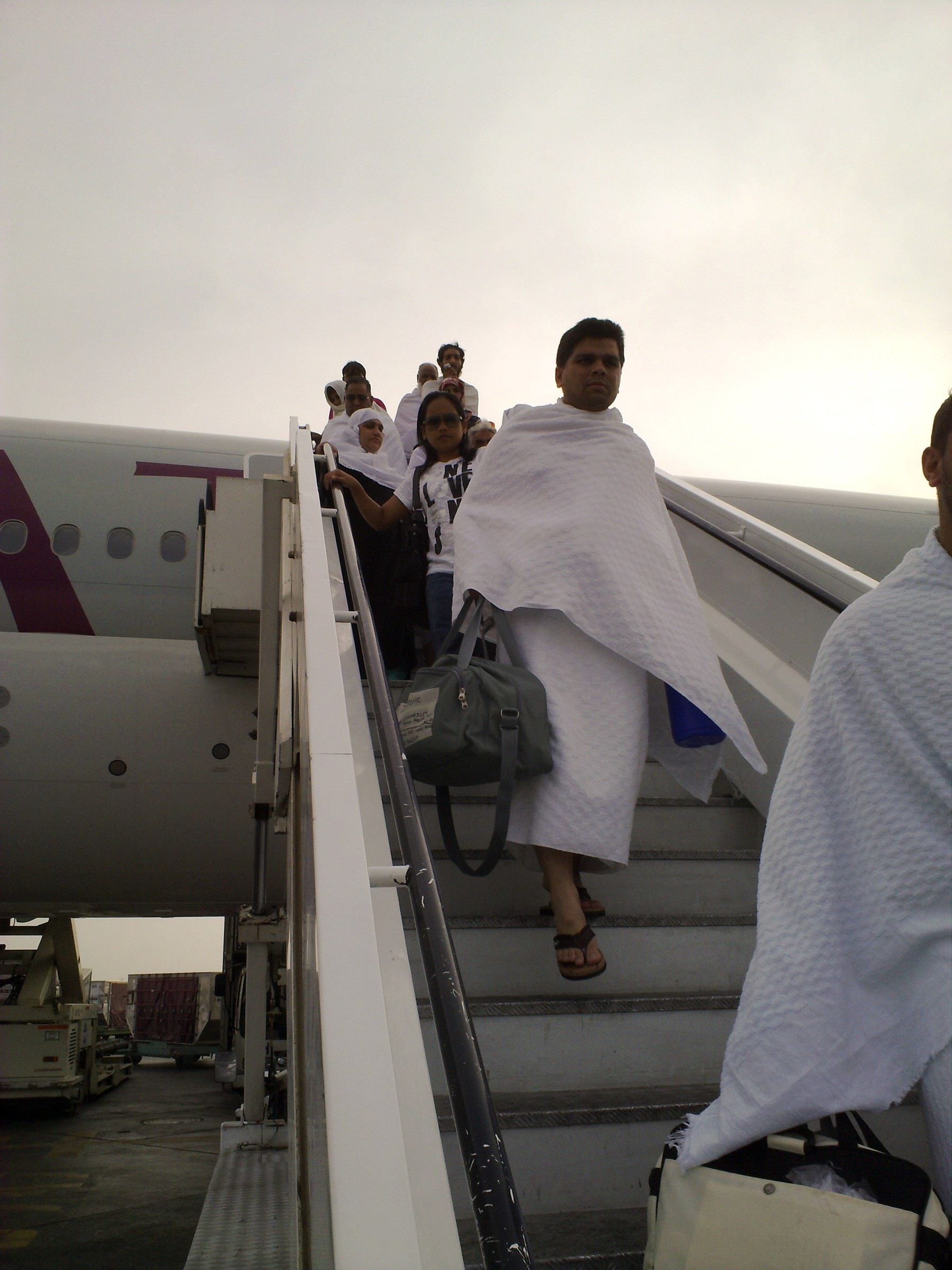
On the way out, the pilgrim says "Bismillāh, tawakkaltu 'ala llāh, wa lā ḥawla wa lā quwwata illā billāh": in the name of Allah, I put my trust in Allah, and there is no power and no strength except with Allah. The Prophet ﷺ said that whoever says it is told: you are guided, you are taken care of, and you are protected (Abu Dawud). Once seated for the journey, they say the travel dua, which is in Umrah duas along with the words for the way home.
Asking them to pray for you
A pilgrim's dua is one to hope for. The Prophet ﷺ said: "The one who fights in the cause of Allah, and the pilgrim on Hajj or Umrah, are Allah's guests. He called them and they answered, and they ask of Him and He gives them" (Ibn Majah). He also said: "Three duas are answered, there is no doubt about them: the dua of a father, the dua of a traveller, and the dua of someone wronged" (Abu Dawud).
Your pilgrim gains as well when they pray for you. The Prophet ﷺ said: "No Muslim prays for his brother behind his back without the angel saying: and the same for you" (Muslim).
- Write down what you'd like them to pray for in two or three lines, or send a voice note before they leave. A list in their pocket is more reliable than memory in the crowd.
- There are no set words for this. They can pray for you in their own language, however it comes.
- If you'd like them to perform an Umrah for a parent who has died or can't travel, agree it before they go, and read Umrah on behalf of someone.
When they come back
The Sunnah gives no fixed greeting for someone back from Umrah, so any good words will do. People say "May Allah accept it", "Umrah Mubarak" or "Welcome home", and the pilgrim answers "And from you" or "Ameen, and you too."
The best thing to wish them is that Allah accepts their Umrah and forgives their sins. The Prophet ﷺ said: "One Umrah to the next is an expiation for what lies between them, and an accepted Hajj (mabrur) has no reward but Paradise" (al-Bukhari). That is why a returning pilgrim is wished a "Hajj mabrur", and someone back from Umrah is usually told simply "May Allah accept it."
When the Prophet ﷺ came home from Hajj or Umrah, he said "Allāhu akbar" three times on every rise in the ground and then: "Āyibūna, tā'ibūna, 'ābidūna, sājidūna, li-rabbinā ḥāmidūn": we return, repenting, worshipping, prostrating, and praising our Lord (al-Bukhari).
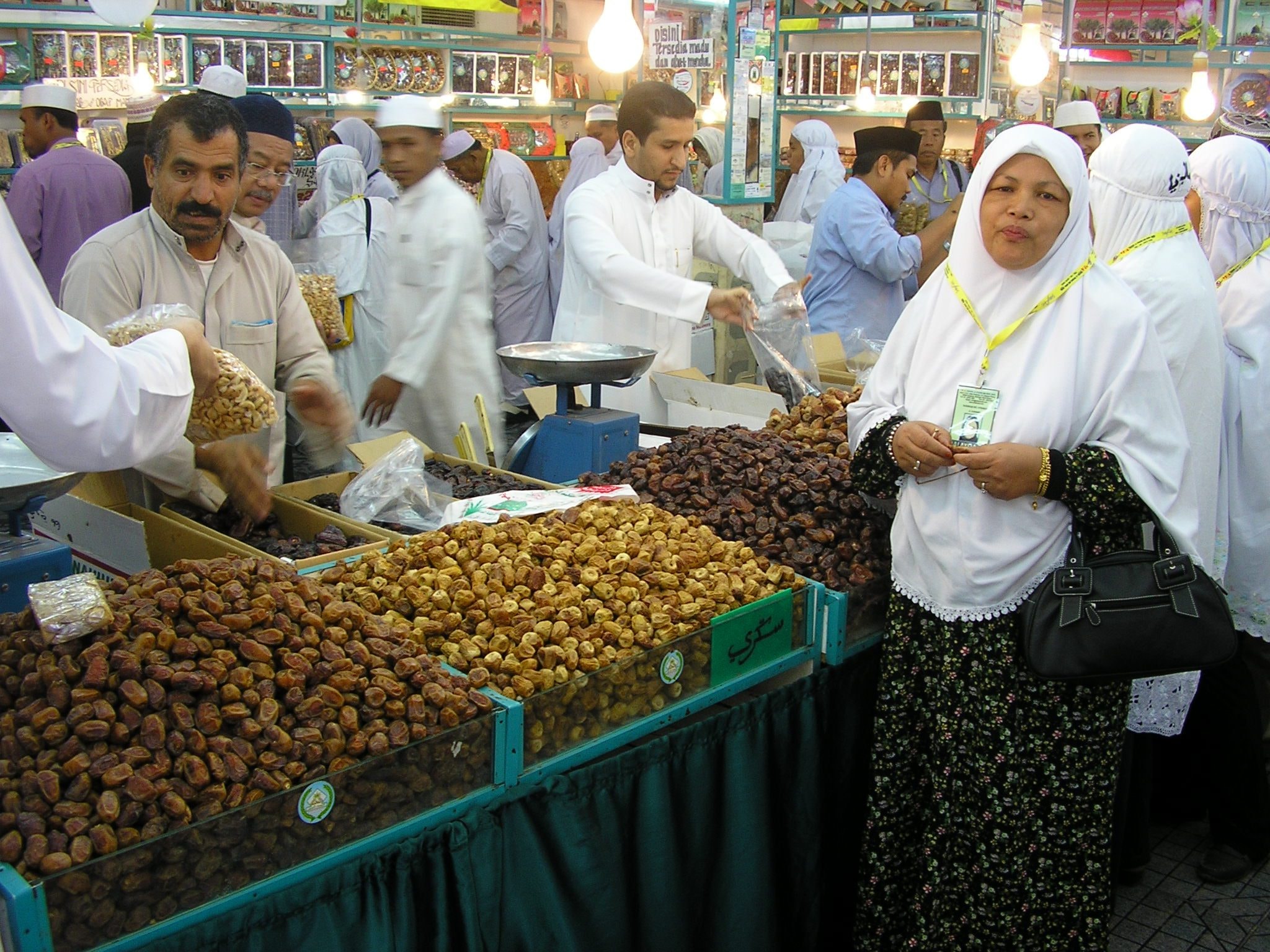
Most pilgrims bring Zamzam water and dates home as gifts. Our guides to Zamzam water and Ajwa dates have what you need to know about both.
Messages you can send
When they leave:
- "Astawdi'u llāha dīnaka wa amānataka wa khawātīma 'amalik. May Allah accept your Umrah and bring you home safe. Please keep us in your duas."
- "May Allah give you taqwa as your provision, forgive your sins and make every good thing easy for you. Safe travels!"
- "Umrah Mubarak in advance! Make dua for us at the Kaaba."
When they're back:
- "Welcome home! May Allah accept your Umrah and forgive your sins."
- "So good to have you back. May Allah accept it from you, and may it be the first of many."
Find your hotel by the Haram
Compare the walk, the view and the price, then book in minutes.
See the hotelsSources
- Sunan Abi Dawud 2600: Ibn Umar's farewell, as the Prophet bade farewell · Checked 9 Nov 2026
- Jami at-Tirmidhi 3443: what to say when bidding someone farewell · Checked 9 Nov 2026
- Jami at-Tirmidhi 3444: may Allah give you taqwa as your provision · Checked 9 Nov 2026
- Sunan Ibn Majah 2825: I entrust you to Allah, whose trusts are never lost · Checked 9 Nov 2026
- Sunan Abi Dawud 5095: the dua on leaving home · Checked 9 Nov 2026
- Sunan Ibn Majah 2893: the pilgrims of Hajj and Umrah are Allah's guests · Checked 9 Nov 2026
- Sunan Abi Dawud 1536: the traveller's dua is answered · Checked 9 Nov 2026
- Sahih Muslim 2732a: praying for your brother in his absence · Checked 9 Nov 2026
- Sahih al-Bukhari 1773: from one Umrah to the next · Checked 9 Nov 2026
- Sahih al-Bukhari 1797: what the Prophet said on coming home · Checked 9 Nov 2026