Umrah vaccine requirements: meningitis jab and staying well
The Umrah vaccine you need: the meningitis jab, when to get it and how long it lasts, polio and flu, where to get it, and staying well in Makkah and Madinah.
7 min read
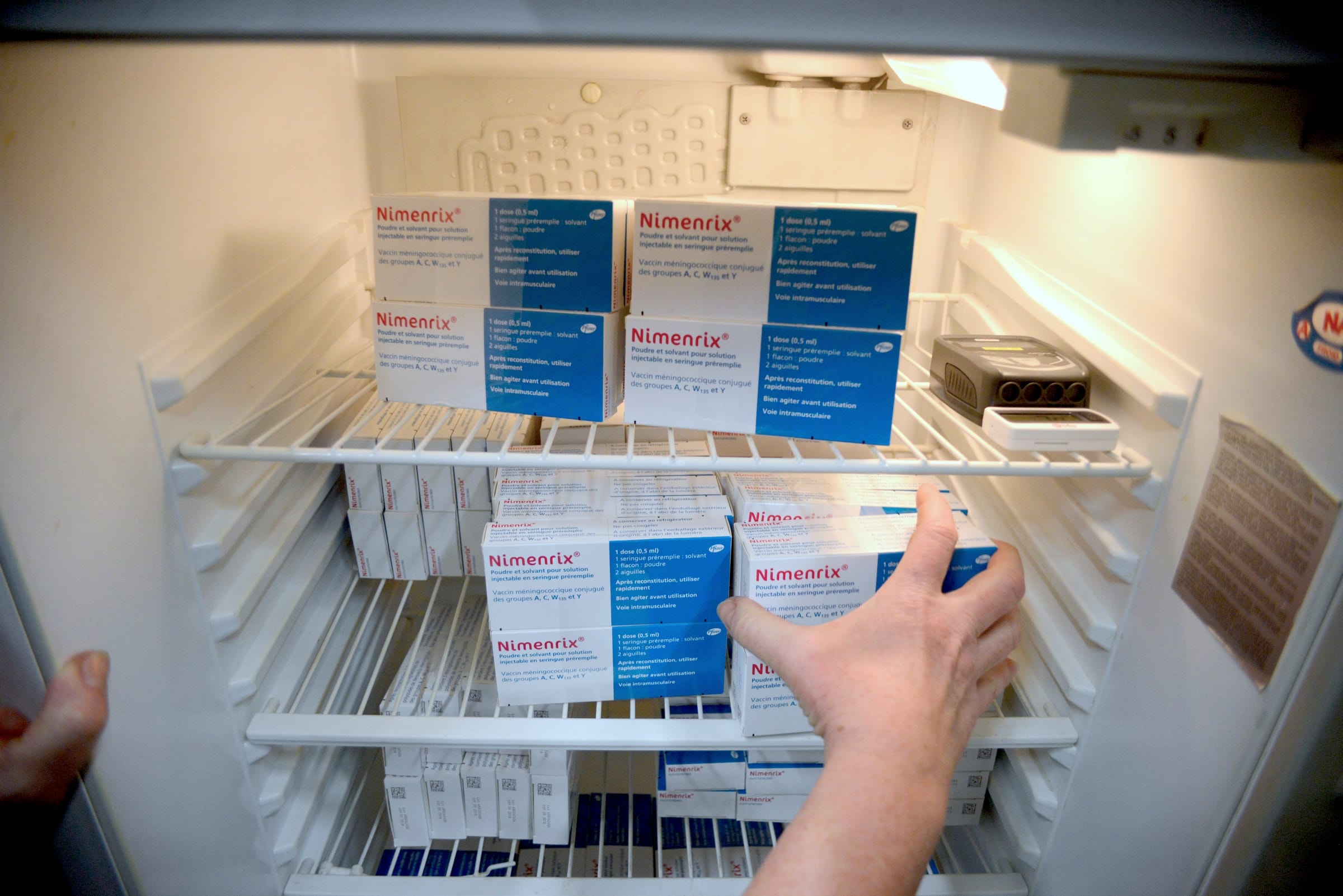
Every pilgrim needs a meningitis vaccine for Umrah: the quadrivalent meningococcal (ACWY) vaccine, given at least 10 days before you arrive in Saudi Arabia. The conjugate vaccine counts for five years and the polysaccharide one for three. Travellers from some countries also need polio or yellow fever vaccination, and the flu jab is recommended for everyone.
That is what the Saudi health requirements for Umrah in 1447 (2026) say, and they were still the latest published when we checked on 11 November 2026. The rules change from one season to the next, so check them again before you book. This page is general health information. Your own doctor or travel clinic will tell you what you need.
Which vaccines are required for Umrah?
- Meningitis, for every pilgrim from every country. The conjugate ACWY vaccine, or the five-strain ACYWX one, counts for five years, and the polysaccharide ACWY vaccine for three. Either has to be given at least 10 days before you arrive.
- Polio, for travellers from Pakistan, Afghanistan, Indonesia, Palestine, Yemen and a list of African countries, Nigeria among them: at least one dose, ideally given in the past 12 months and at least four weeks before you arrive. For Egypt and some other countries the dose is advised but not required.
- Yellow fever, for anyone over nine months old coming from listed countries in Africa and South America. The certificate is valid for life from 10 days after the jab.
- Proof of a COVID-19 vaccine or of immunity, for pilgrims over 65, pregnant women and people with certain long-term conditions, such as heart, lung or kidney disease, cancer or a weak immune system.
Your meningitis certificate should give the name of the vaccine and the date you had it. If it doesn't say which type it was, it counts for three years only.
You may read that the meningitis rule was dropped. In February 2025 Saudi Arabia's civil aviation authority withdrew a circular telling airlines to check it, but the Ministry of Health's requirements still list the vaccine for every pilgrim. So get the vaccine and carry the certificate.
Recommended vaccines: flu and routine jabs
The Saudi health authorities advise the current season's flu vaccine before you travel, and ask pilgrims to be up to date with routine vaccines: diphtheria, tetanus, whooping cough, polio, measles, mumps and chickenpox. The UK's travel health service, TravelHealthPro, adds hepatitis B as one to consider.
Where to get the meningitis jab
In the UK, travel clinics and many pharmacies with a travel health service give the ACWY vaccine. It isn't one of the travel vaccines the NHS gives free, so expect to pay. Book four to six weeks before you fly, and ask for a record with your full name, the vaccine's name and type, the date, and the stamp of the doctor, nurse or pharmacist who gave it.
Elsewhere, ask your health ministry's travel vaccination centres or a private travel clinic. If you live in Saudi Arabia, book the adult vaccination clinic in the Sehhaty app. The Ministry of Health says a dose from the past five years still counts.
The Umrah cough, colds and flu
Many pilgrims come home with a cough. TravelHealthPro calls it the Hajj cough, a viral chest infection that is mild for some pilgrims and bad enough for others to get in the way of the rites. Crowds raise the risk of chest infections, so the Saudi health authorities advise:
- Wash your hands with soap and water often, or use a sanitiser.
- Wear a face mask in crowds and during the rites.
- Cough or sneeze into a tissue, then throw it away.
- Keep away from people who look ill, and don't share cups or personal things.
- Stay away from camels at farms and markets. They can carry MERS, a respiratory virus, so don't drink raw camel milk either.
The mosques and hotels are air-conditioned and often feel cold after the street, so keep a light layer with you. If a fever, a cough or breathlessness starts during the trip or in the two weeks after it, see a doctor and say you have been on Umrah.
Heat and heatstroke
In Makkah, daytime temperatures can pass 30 °C even in winter, and summer is far hotter: see Makkah and Madinah weather by month. To stay well in the heat:
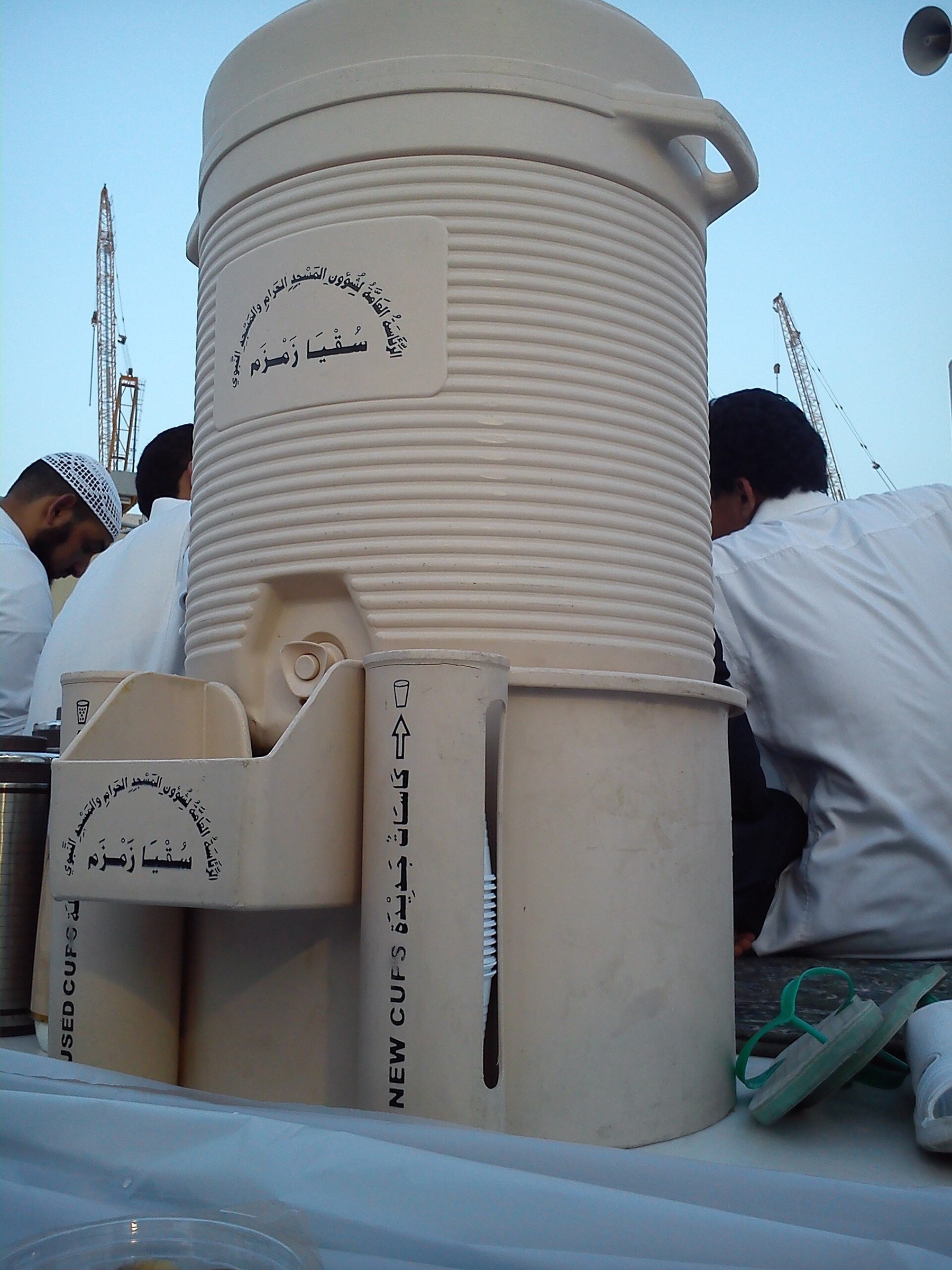
- Drink water often, before you feel thirsty. Zamzam is free throughout both mosques.
- Stay out of direct sun between 10 am and 4 pm where you can, and carry an umbrella when you walk.
- Wear loose, light-coloured clothes.
- Use sunscreen of SPF 30 or more and put it on again every two to three hours. In ihram, choose an unscented one, as ihram and the miqat explains.
- If you take medicines that make you lose fluid, such as diuretics, ask your doctor whether the dose needs changing for the trip.
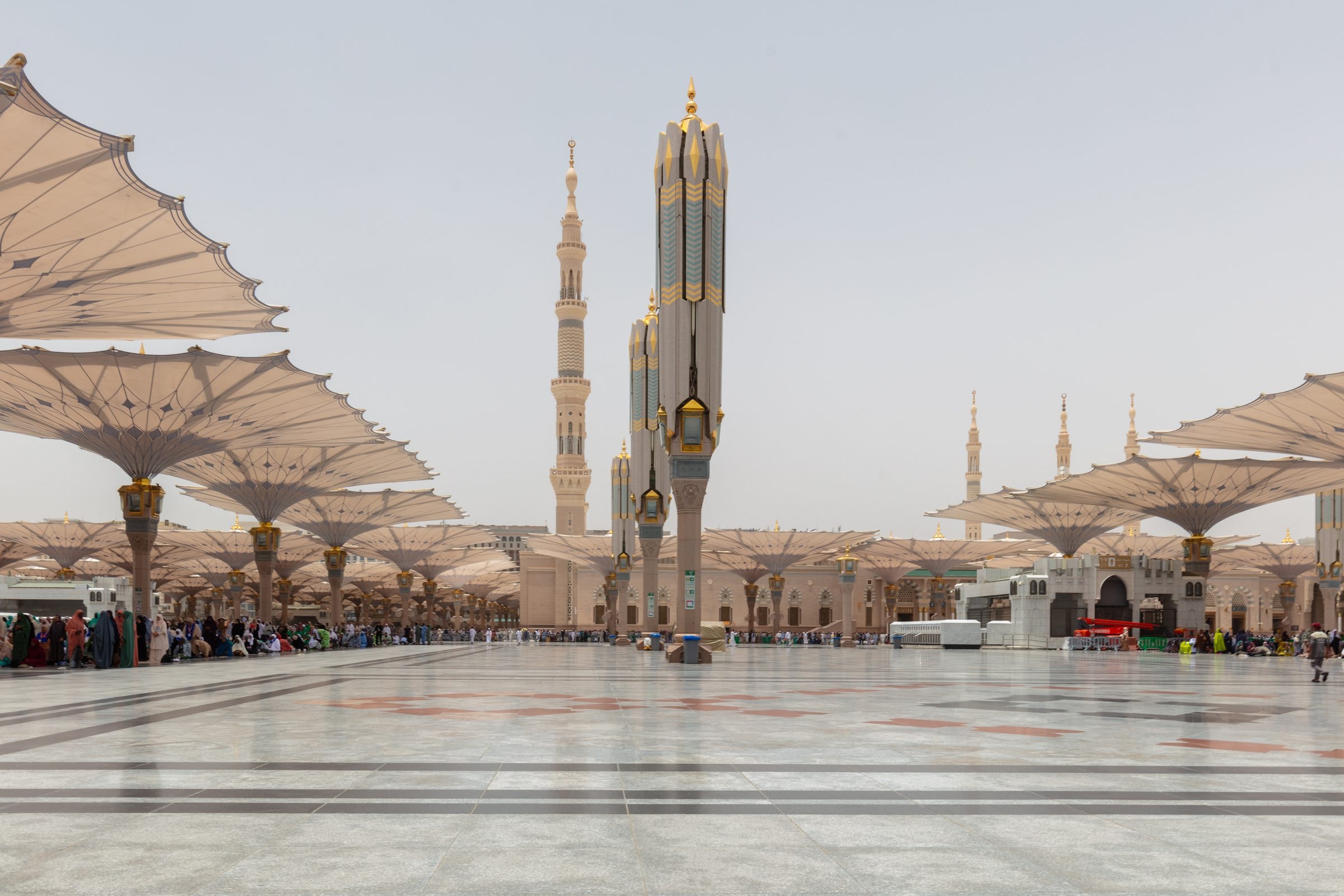
Watch for heat exhaustion: heavy sweating, cool and pale skin, headache, dizziness, nausea, cramps or weakness. Get into the shade or the air-conditioning, loosen your clothes, cool your neck and armpits with cold compresses or water, and sip cold water. Get medical help if you vomit, feel worse, or aren't better within an hour.
Heatstroke is an emergency. The signs are a temperature of 40 °C or more, hot red skin, a strong fast pulse, confusion or fainting. Call 997 at once, move the person somewhere cool, cool them with cold water and compresses, and give them nothing to drink.
Sore feet and blisters
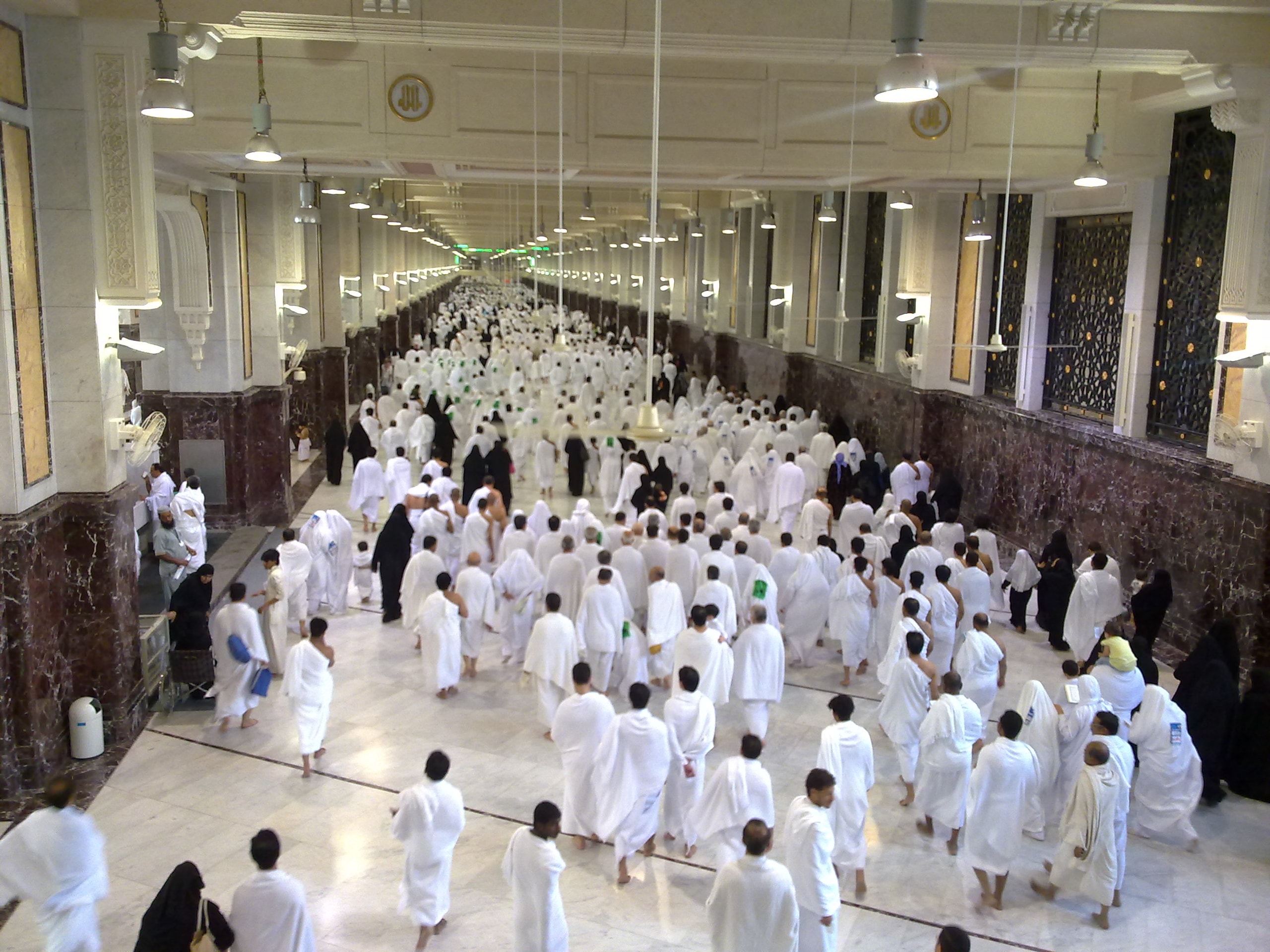
You will walk a lot. The sa'i alone is seven lengths of 394 metres, close to three kilometres, and then there is the walk to the mosque for each prayer. TravelHealthPro notes that minor injuries, mostly to the feet, are common among pilgrims.
- Bring footwear you have already walked in, never a new pair. For men in ihram that means sandals, so get used to walking in them at home.
- Pack blister plasters, and put one on at the first sore spot.
- Keep your feet covered outdoors in the middle of the day. The Ministry of Health warns against walking on hot surfaces.
- Carry your shoes in a bag inside the mosque, so you can leave by the gate nearest your hotel.
Medicines to bring
- Enough of your usual medicines for the whole trip and a few days more, in their original packs, with a copy of the prescription and a letter or report from your doctor on your condition. Keep them in your hand luggage.
- A permit for controlled medicines. Narcotic and psychotropic medicines, some strong painkillers and sleeping pills among them, need approval from the Saudi Food and Drug Authority before you travel, through its Controlled Drugs System (cds.sfda.gov.sa), with your prescription or a medical report. You can bring up to 30 days' supply, or enough for your stay if it is shorter.
- Simple remedies for colds, pain and an upset stomach, and oral rehydration salts.
- Your own disposable razor if you will shave your head at the end of Umrah, or a barber who opens a new blade in front of you. A used blade can pass on hepatitis B and C and HIV.
To avoid an upset stomach, wash your hands before you eat and steer clear of unpasteurised milk and undercooked meat. The rest of what to pack is in the Umrah checklist.
Getting medical help in Makkah and Madinah
- For an ambulance, call 997, the Saudi Red Crescent, or use its Asefni app.
- On 937, the Ministry of Health's line, doctors give medical advice around the clock.
- In Makkah, Ajyad Emergency Hospital next to the Haram is open 24 hours, and there are emergency centres inside the mosque itself.
- In Madinah, Al-Haram Hospital, Al-Salam Waqf Hospital and the Al-Safiyah and Bab Jibreel urgent care centres serve visitors to the Prophet's Mosque.
Insurance, long-term conditions and pregnancy
The Umrah visa comes with compulsory health insurance that covers emergency care at approved hospitals and clinics across Saudi Arabia. You can check your policy with your passport number on the website of the Council of Health Insurance. The visa itself is explained in the Umrah visa and the Nusuk app.
If you have a long-term illness or you are pregnant, see your doctor before you book. Umrah means long walks in the heat and dense crowds, and you should carry a medical report on your condition. TravelHealthPro lists the last three months of pregnancy, a high-risk pregnancy at any stage, and advanced heart or kidney failure among the conditions that can keep a pilgrim from performing the Hajj rites, so ask your doctor what they mean for your Umrah. If you are going with your parents, read Umrah with elderly parents too.
Find your hotel by the Haram
Compare the walk, the view and the price, then book in minutes.
See the hotelsSources
- Saudi Public Health Authority (Weqaya), on the Ministry of Health site: health requirements for Umrah, 1447H (2026) · Checked 11 Nov 2026
- Ministry of Health: Pilgrims' Health (no 1448H Umrah requirements published yet) · Checked 11 Nov 2026
- Khaleej Times: the civil aviation authority withdraws its airline circular on the meningitis vaccine for Umrah (6 February 2025) · Checked 11 Nov 2026
- TravelHealthPro (UK National Travel Health Network and Centre): Hajj and Umrah, updated 26 June 2026 · Checked 11 Nov 2026
- NHS: travel vaccinations (reviewed 30 April 2026) · Checked 11 Nov 2026
- Ministry of Health: the meningitis vaccine at the Sehhaty app's adult vaccination clinic (1447H) · Checked 11 Nov 2026
- Arab News: the Saudi health ministry urges the meningitis vaccine before Umrah (24 February 2025) · Checked 11 Nov 2026
- Kemenkes: sertifikat vaksin meningitis bisa diunduh di SATUSEHAT Mobile (7 Mei 2023) · Checked 11 Nov 2026
- Kemenkes: cara akses layanan vaksin meningitis (18 Juli 2024) · Checked 11 Nov 2026
- Kemenkes: vaksin polio wajib bagi pelaku perjalanan dari Indonesia ke Arab Saudi (16 April 2025) · Checked 11 Nov 2026
- The Star: Malaysia's Health Ministry on the meningococcal vaccine for haj and umrah pilgrims (28 May 2024) · Checked 11 Nov 2026
- Türkiye Hudut ve Sahiller Sağlık Genel Müdürlüğü: Seyahat Sağlığı Merkezleri · Checked 11 Nov 2026
- Türkiye Hudut ve Sahiller Sağlık Genel Müdürlüğü: seyahat aşıları, meningokok aşısı · Checked 11 Nov 2026
- Türkiye Hudut ve Sahiller Sağlık Genel Müdürlüğü: MERS-CoV in Saudi Arabia (15 October 2026) · Checked 11 Nov 2026
- MesVaccins.net: Arabie saoudite, recommandations pour le Hajj et l'Omra en 2026 (5 June 2026) · Checked 11 Nov 2026
- Ministry of Health: first aid for heat exhaustion · Checked 11 Nov 2026
- Ministry of Health: first aid for sunstroke · Checked 11 Nov 2026
- Ministry of Health: preventing heat exhaustion among pilgrims (3 June 2025) · Checked 11 Nov 2026
- Pilgrim Experience Program: the length of the Mas'a (18 March 2024) · Checked 11 Nov 2026
- Saudi Food and Drug Authority: medicines and products arriving for pilgrims' use, 1447H · Checked 11 Nov 2026
- APP (SPA): SFDA permits for controlled medicines carried by pilgrims (5 May 2026) · Checked 11 Nov 2026
- Arab News: the Saudi Red Crescent asks people to call 997 or use the Asefni app (19 October 2026) · Checked 11 Nov 2026
- Ministry of Health: 937 services · Checked 11 Nov 2026
- Ministry of Health: the 937 call centre for pilgrims, in seven languages (3 June 2025) · Checked 11 Nov 2026
- Ministry of Health: Ajyad Emergency Hospital and the Haram's emergency centres (Ramadan 1445) · Checked 11 Nov 2026
- Al-Madina: the hospitals and urgent care centres serving the Prophet's Mosque (21 March 2025) · Checked 11 Nov 2026
- Council of Health Insurance: health insurance for Hajj and Umrah pilgrims · Checked 11 Nov 2026