Jabal al-Nour and the Cave of Hira: a visitor's guide
Where Jabal al-Nour is, how to climb to the Cave of Hira on the new path, when to go, and what to see in the Hira Cultural District at its foot.
3 min read
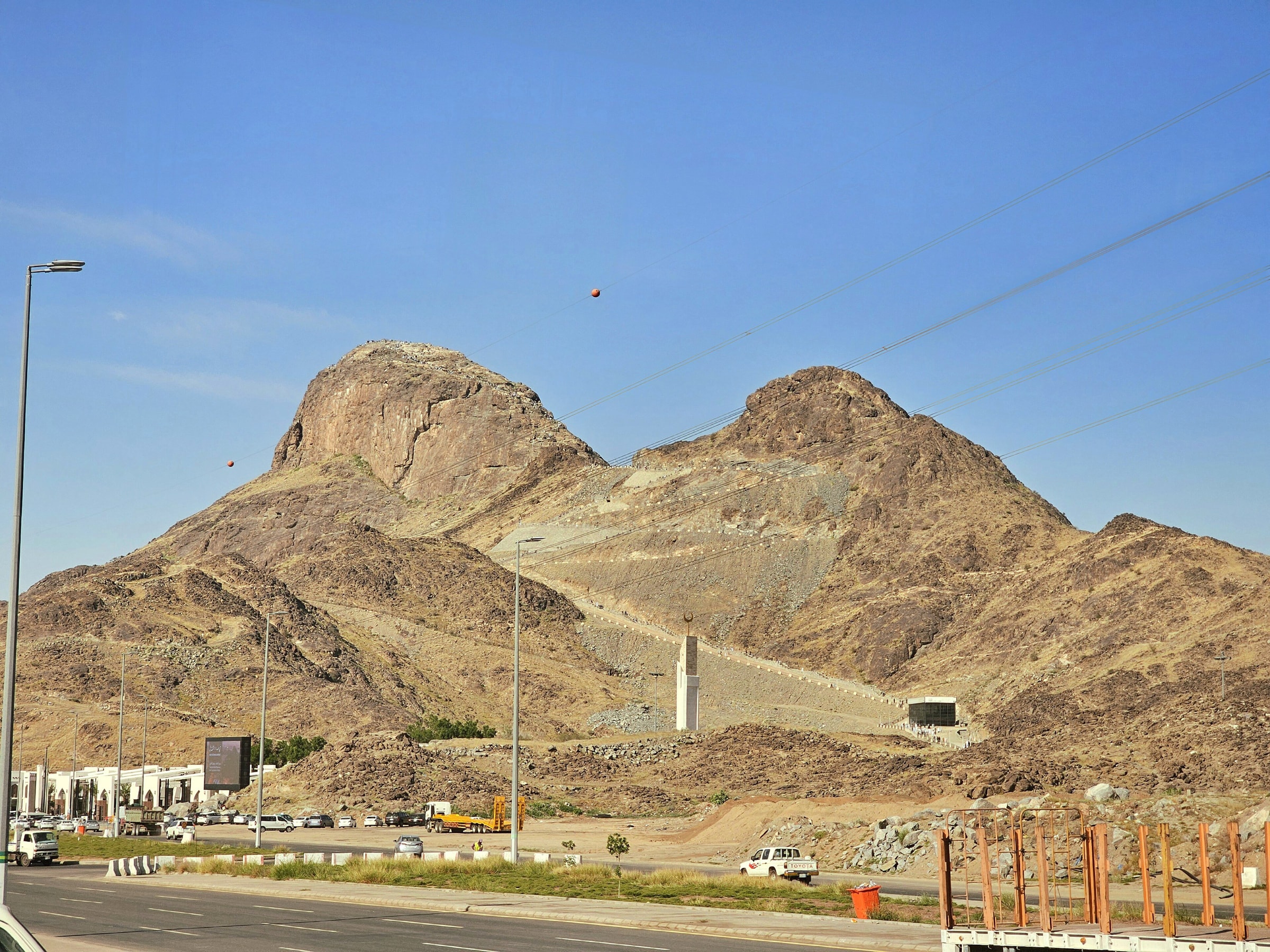
The first verses of the Quran came down in the Cave of Hira, near the top of Jabal al-Nour, and few visitors to Makkah leave without seeing it. The visit is easier than it was a few years ago. A paved, lit path now climbs from the Hira Cultural District, and an exhibition at the foot tells the story for anyone who can't make the climb.
Where is Jabal al-Nour?
In the Hira district, about 5 km north-east of the Grand Mosque: a quarter of an hour or so by taxi or ride-hailing app when the roads are clear. The mountain rises to about 640 m above sea level, and you'll pick it out from a distance by its sharp, humped summit.
The story of the cave
Before the prophethood, the Prophet ﷺ would spend nights alone in the Cave of Hira in worship, then go back to Khadijah for provisions and return. Aisha describes what came next: "the truth came to him while he was in the Cave of Hira. The angel came to him and said: Read" (al-Bukhari). The first words revealed were "Read in the name of your Lord who created" (Al-Alaq 96:1).
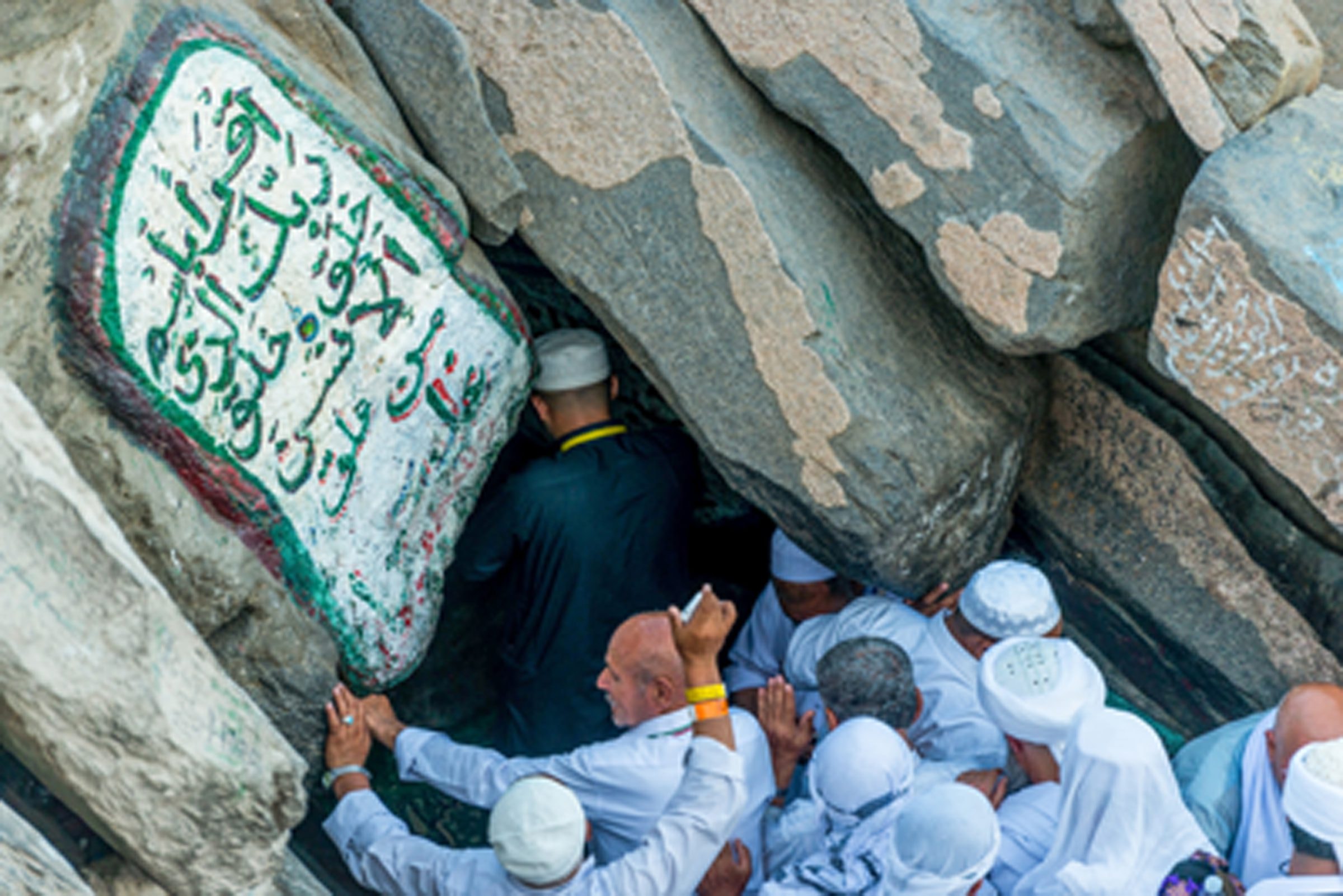
The cave is a narrow gap between huge boulders just below the summit, with room for only a few people at a time. Visitors wait outside and take turns.
Climbing to the cave
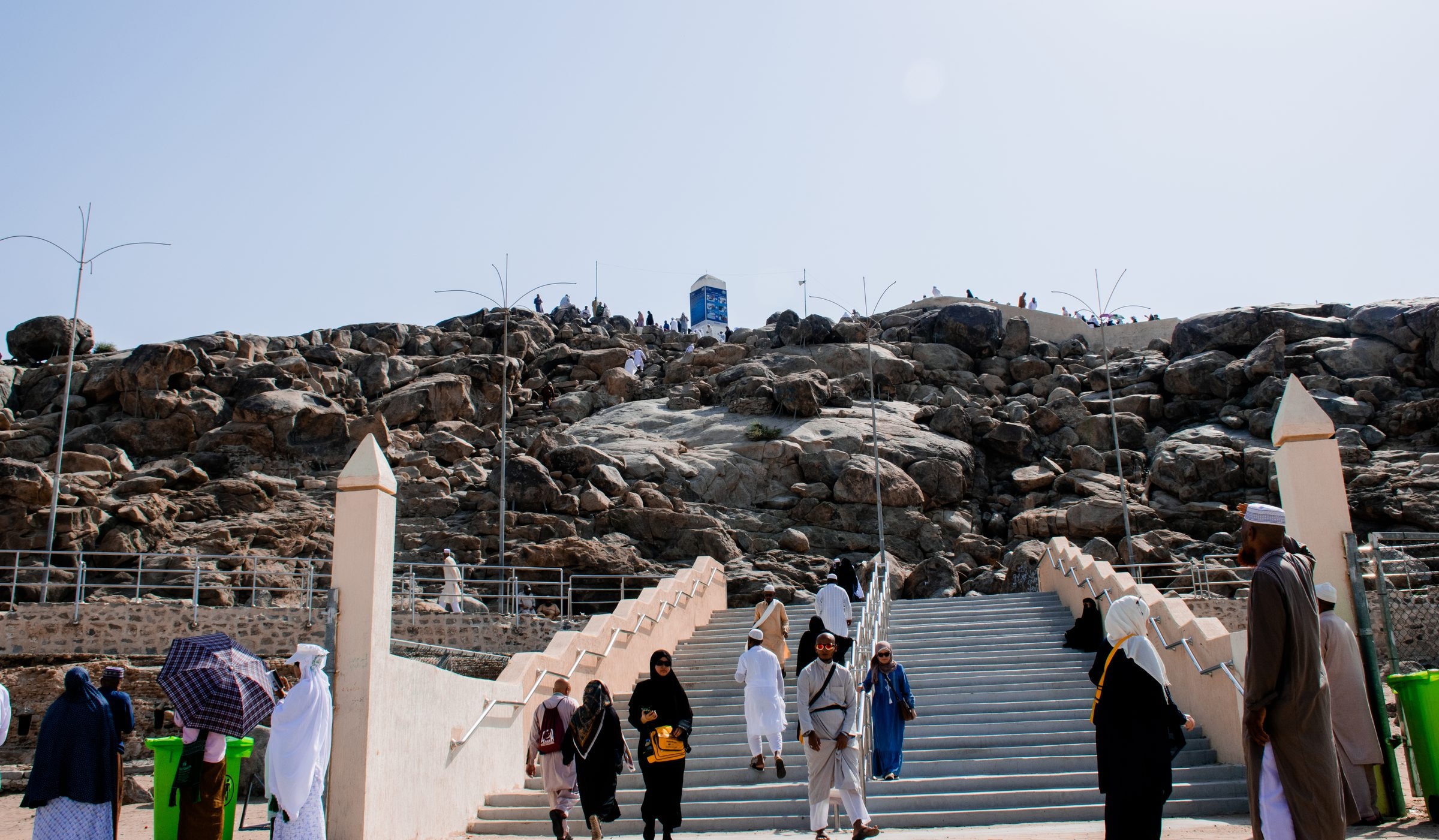
The old track has been closed for safety, and the climb now starts at the Revelation Exhibition in the Hira Cultural District. A visitor centre at the bottom lets people onto the path in groups and explains the site. The path is paved and lit almost to the top, with benches along the way, and a stone stairway runs beside it if you'd rather take steps.
- Allow about an hour up and a little less down.
- Go after Fajr or after Isha, and avoid the middle of the day. Expect a crowd even late at night.
- Wear shoes that grip on rock, and bring your own water.
- It's a hard climb for older people and anyone with heart or knee trouble. For them, the exhibition and museum at the foot are the visit.
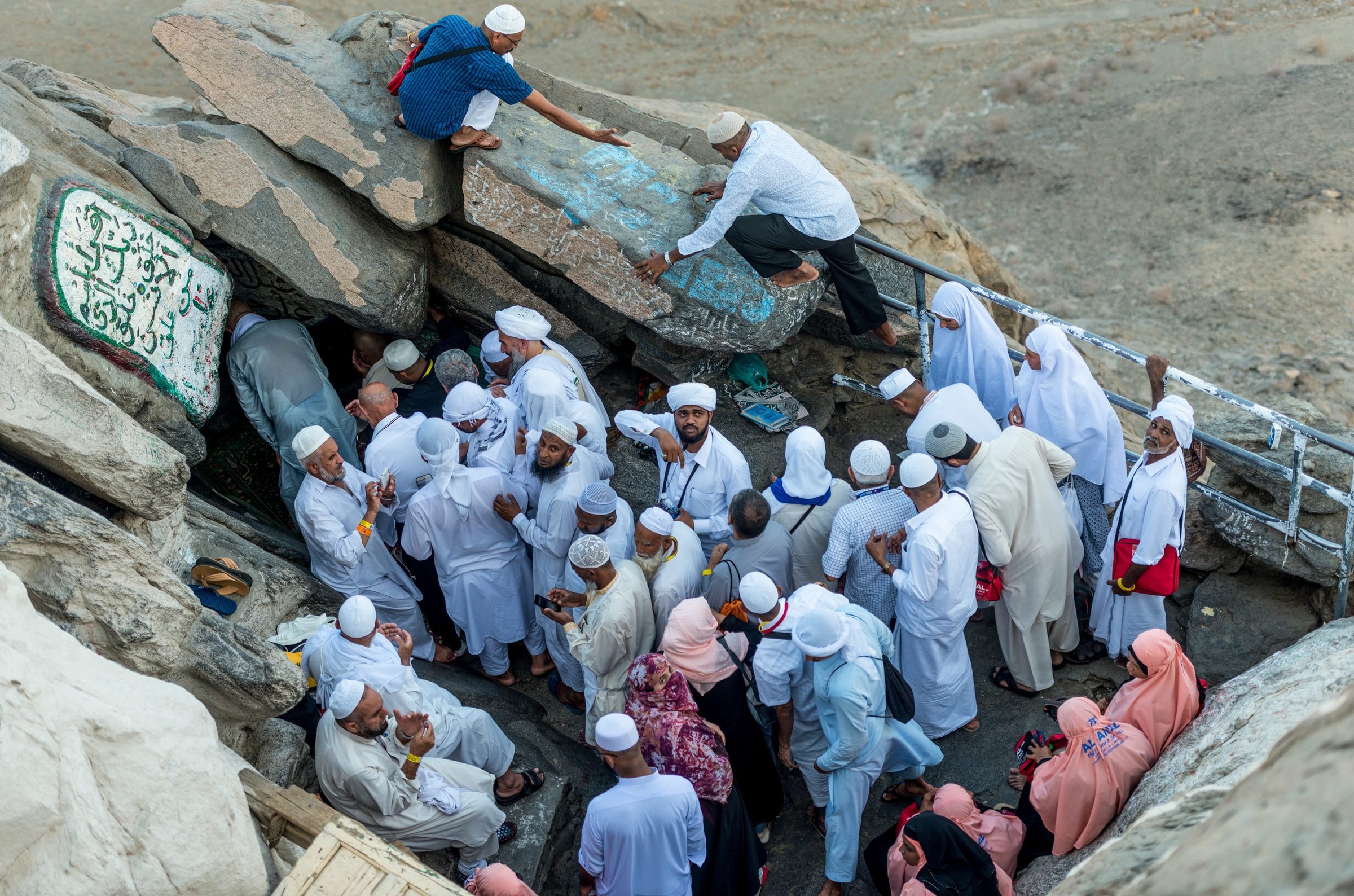
Climbing Jabal al-Nour isn't part of Umrah, and there's no prayer or du'a set for the cave. Go for its story, and leave the rocks as you found them: no writing on them, no stones taken home.
The Hira Cultural District
A district of about 67,000 m² at the foot of the mountain, built around the story of revelation:
- The Revelation Exhibition tells the story in sound and image and has a life-size model of the cave, so anyone who stays below can see what it's like inside.
- The Holy Quran Museum follows the Quran from its revelation to how it was compiled, preserved and printed over the centuries.
- There's also a library, a garden looking up at the mountain, and restaurants, cafés and gift shops.
The district stays open late into the night, but its hours change with the seasons. Check them on its page on Discover Makkah before you go, which is also where you book tickets.
Fitting it in
- Jannat al-Mu'alla, the old cemetery where Khadijah is buried, is close to your route from the Haram, so you can stop there first.
- With children or older parents, make the exhibition and museum the family visit, and climb on your own if you want to.
- Go between two prayers and leave plenty of time to get back before the adhan, as the roads fill up fast.
For more places around the city, read Ziyarat in Makkah.
Hotels near Masjid al-Haram
Compare the walk, the view and the price, then book in minutes.
See the hotelsSources
- Discover Makkah (Royal Commission for Makkah City and Holy Sites): Hira Cultural District · Checked 9 Nov 2026
- Pilgrim Experience Program: Hira Cultural District expands hours (10 June 2026) · Checked 9 Nov 2026
- Sabq: the path to the Cave of Hira (19 May 2024) · Checked 9 Nov 2026
- Sahih al-Bukhari 3: the start of the revelation · Checked 9 Nov 2026
- Wikipedia: Jabal al-Nour · Checked 9 Nov 2026